Producer,Poptime_작곡가 팝타임 Details
Class introduction
Class Intro
Producer, Poptime
“I don't think music is completely the domain of experts.
I hope that people who watch this lecture will be able to enjoy music as if it were a game.”
I hope that people who watch this lecture will be able to enjoy music as if it were a game.”
#anysongchallenge
“Do you know Pop Time’s song that recorded hundreds of millions of video views around the world?
Among Block B's 'HER', Song Mino's 'Fear', Zico's 'Bermuda Triangle', Hangzoo's 'Red Sun', and 'These Days', is there any music you don't know?
Don't you want to make a song like this too?
Those of you who want to learn composition but are at a loss, or those of you who don't know what's going on even after watching the overflowing lectures on YouTube!
Find out about his compositional know-how accumulated over 15 years!
Don't you want to make a song like this too?
Those of you who want to learn composition but are at a loss, or those of you who don't know what's going on even after watching the overflowing lectures on YouTube!
Find out about his compositional know-how accumulated over 15 years!
Speaker introduction
Producer
Poptime
Hello, this is Poptime. I started making music at the age of 18, met Block B and Zico at the age of 24, and worked on many songs together, creating songs loved by the public.
We have worked together on almost all of Block B and Zico's songs,
He created songs such as Psy's 'I Luv It', Song Min-ho's 'Fear', and Sejeong's 'Flower Road', and also composed 'Any Song', a song that was greatly loved while creating numerous challenge videos.
[(G)I-DLE]
(2024) Composed "I Hate Being Sick (Fate)"
(2024) Composed "Super Lady"
(2024) Composed "Wife"
(2023) Composed "Queencard"
(2022) Composed "Nxde"
(2022) Composed "TOMBOY"
[Block B]
(2017) MONTAGE album title song
Composed 'Shall We Dance'
(2016) Composed 4 out of 6 songs on Blooming Period album
*Representative song: TOY, It was love
(2016) Composed single <A Few Years Later>
(2014) Composed 5 of the 6 songs on Her album, including the title song
*Representative songs: HER, Rare Woman, JACKPOT
(2013) Very Good album composition
*Representative song: Very Good, When, Where, What and How
(2012) Composed BLOCKBUSTER album title song "Nilirimambo"
[Wanna One]
(2018)<1÷χ=1 (UNDIVIDED)> Album
Composed 'Kangaroo'
[ZICO]
(2020) <Any Song> single co-composition
(2019) THINKING Part. 1/2 Participation in album composition
*Representative song: People, Dystopia
(2018) Soulmate single composition
(2017) Composed all songs on TELEVISION album
*Representative song: ARTIST, FANXY CHILD
(2017) She's a Baby single composition
(2016) Bermuda Triangle single composition
(2015) Composed all songs on GALLERY album
*Representative songs: Eureka, Pride and Prejudice
(2015) Composed all songs on Boy and Girls album
*Representative song: Boys and Girls, Day
(2015) <Say Yes Or No> single composition
(2014) Tough Cookie single composition
[Sejung Kim]
(2016) <Flower Road> single composition
[Psy]
(2017) PSY 8th 4X2=8 Album
Composed the title song 'I LUV IT'
[Major broadcast projects]
(2018)TVN, Mr. Sunshine OST:
Ozone composed 'Shine Your Star'
(2018) Participated in producing Mnet, High School Rapper 2
*Representative song: Composed by Ha-on Kim 'Graduation'
(2018)TVN, Wise Prison Life OST:
Kang Seung-yoon
(2017) Participated in producing Mnet, Show Me the Money 6
*Representative songs: 'Things these days', 'Red Sun'
(2016)MBC, Infinite Challenge: Great Legacy:
Composed by Jeong Jun-haXZICO 'When I'm Tired'
(2015) Participated in producing Mnet, Show Me the Money 4
*Representative songs: Song Mino's 'Fear', Song Mino & Zico's 'Okey Dokey', 'moneyflow'
Also working with ITZY, TWICE, (G)I-DLE, The Boyz, Seventeen, Super Junior, X1, NU'EST, etc.
class features
Class Highlights
Create your own song with Poptime's premium class
Have you ever wanted to learn composition, but weren't sure where to start? You don't know what's going on even after watching the overflowing composition lectures on YouTube! We systematically teach you 15 years of know-how, from the basics of composition to application.
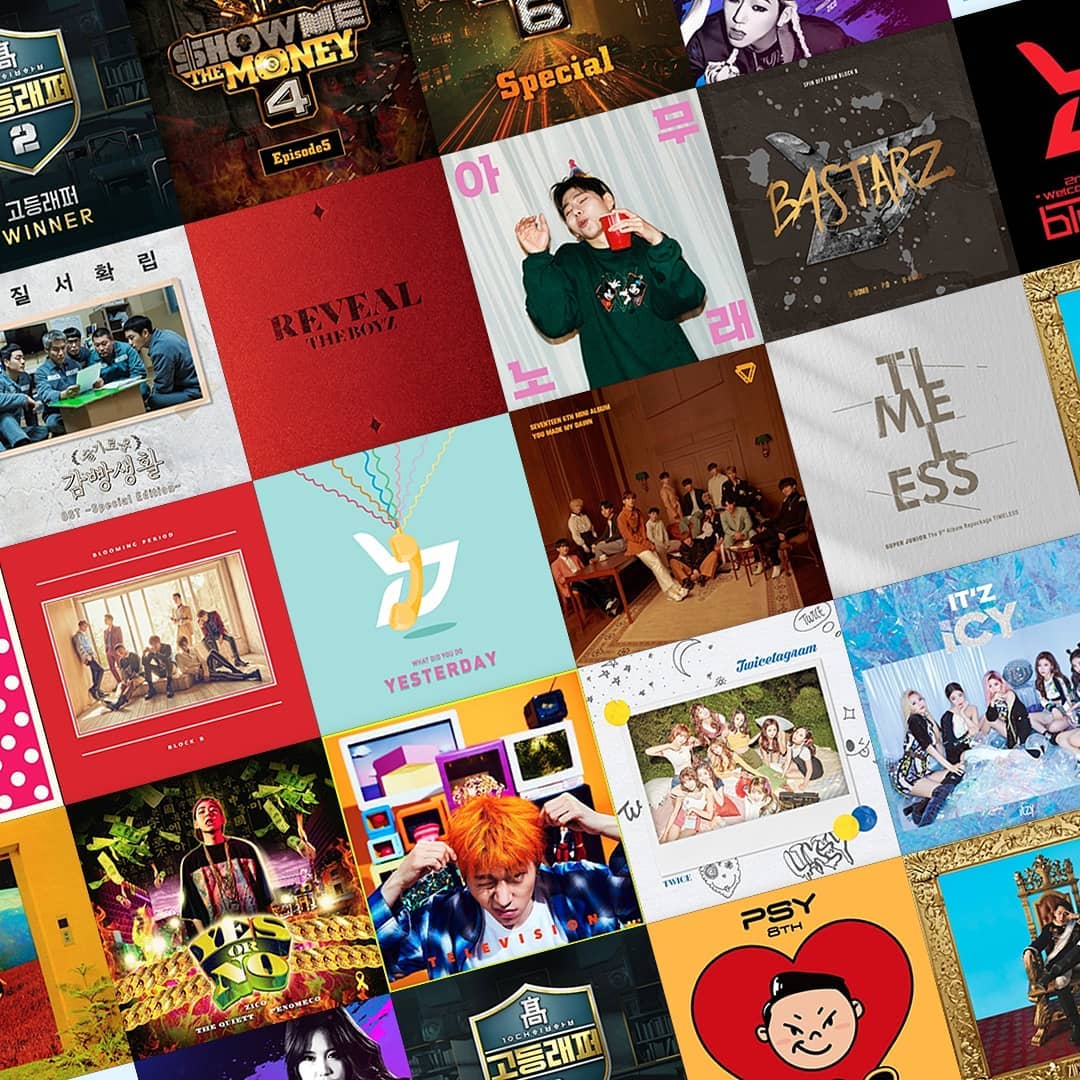
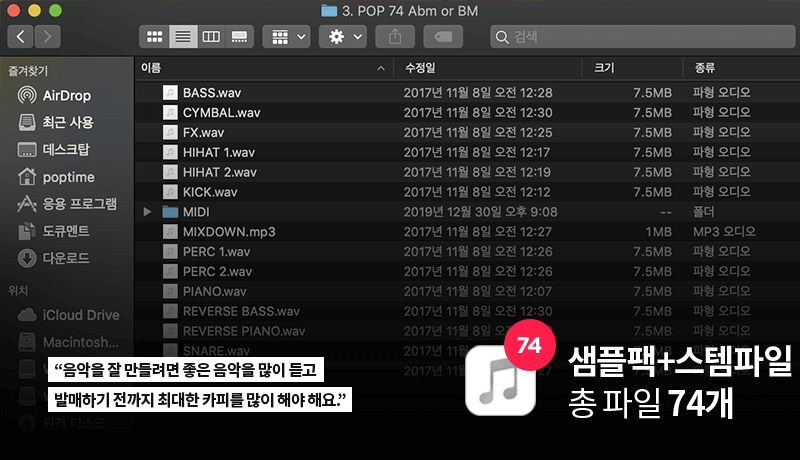
Lecture sample pack & bestselling song stem files included
The hit song maker has experience that spans across all genres including hip-hop, ballad, and pop! Stem files for his representative songs will be released and even sample packs for learning sampling will be shared. Let's improve your skills by copying & practicing on hit songs!
Recommendation
Who should take this class?
A person who is only interested in composing music and is completely new to it
OK even if you don't have any knowledge! You can acquire basic composition skills, from how to install and use equipment to the components of a song.
Beginner composer who knows how to use MIDI
The basics are the most important. From the basics of composition to how to use it! We will show you PopTime's composition know-how generously.
Amateur composer dreaming of making a professional debut
Through this open source case study of Pop Time's representative songs, you can get tips and trendy composition know-how to create successful songs.
Class Details
You'll Learn
-
 How to listen to music wellBasic stamina for composing, listening! Using music ranking charts, Wikipedia, Sound Cloud, etc., we will teach you Pop Time's unique know-how for listening to well-made music and using it to compose music.
 -
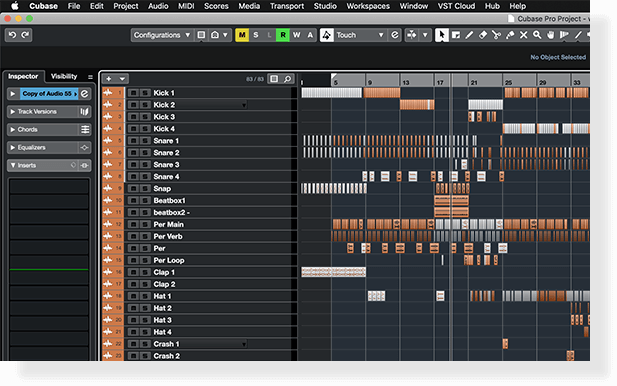 anatomy of musicUsing Poptime's hit song stem files, we will teach you how to understand and utilize the skeleton (beat), muscles (chords and bass), and extroversion (melody) of music.
 -
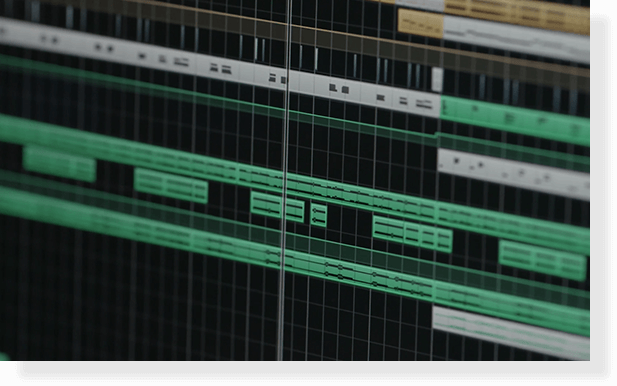 sampling? How do you do that?Sampling, a skill to create new music by extracting/transforming sound sources! Let's make variations on the beat, melody, and bass using various sample packs provided directly by Poptime.
 -
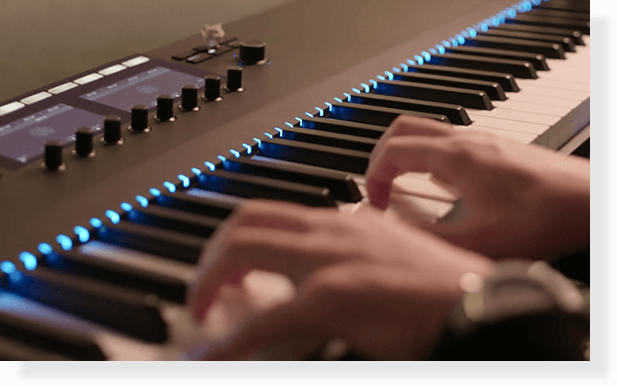 Harmony at your fingertipsHarmony studies are full of content and difficult? Among the contents of this thick book on harmony, only the ones used in actual songs are summarized! Learn how to easily configure different chord progressions.
 -
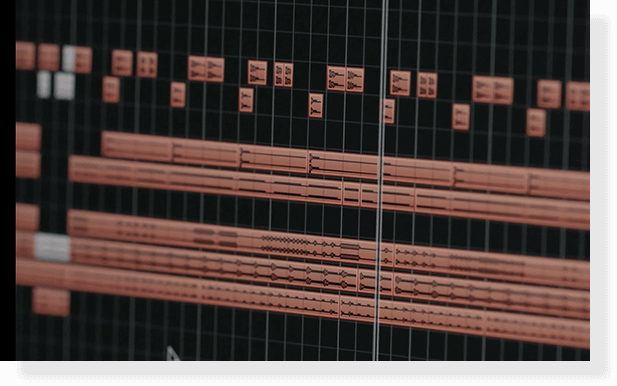 case studyUsing the source material for Poptime's Artist, Bermuda Triangle, and their 2020 new song Ego, we will teach you the skills that Poptime uses when creating actual songs.
curriculum
Curriculum
In-Depth Look
01. Who is Poptime?
- Composer Poptime talks about fellow artists Zico and Gye Beom-ju, and Nathan, who met as a student and is now working as a professional composer. And we talk about the changes that Pop Time wants to bring to you through music, composition, and lectures.
02. How to listen to music smartly
- To make good music, listening to music well must come first. We teach you everything from how to read upcoming trends to how to get inspired by the songs of world-class composers.
03. Skeleton of the song - Understanding drum beats and BPM
- Learn about the most basic beats in composition, especially the most important drums. Take a drum beat and change the BPM to create different feelings from the same beat.
04. Skeleton of the song - Listen to the BPM of the song
- There is no more effective way to create various drum patterns than by learning existing drum patterns in your head. Learn how to find the BPM by looking at the stem files of Pop Time's released songs 'Block B-TOY', 'Song Mino-Fear', and 'Zico-Artist'.
05. Skeleton of the song - Copy the drum beat
- Let's copy drum beats with similar patterns following 'Block B-TOY', 'Song Mino-Gear', and 'Zico-Artist'. And create your own drum beats by freely modifying the copied drum beats by instrument and BPM.
06. Muscle of the song - Chord & Bass
- It is time to add chords and instruments to the basic drum beat using the provided chord book and built-in instruments in Cubase. Once you complete the drums, bass, and chords, it takes on the basic form of a song.
07. Appearance of the song - Add basic melody
- It's time to add a melody that makes the basic song more enjoyable to listen to. Create various melodies by playing the given chords as you like, and learn how to add melodies with the bass.
08. Outward appearance of the song - Cycle of change in the composition of the song
- This is the time to complete a song that continues from the prelude to the chorus based on what we have learned so far. Compose drums, chords, and melodies for each section of Intro- Verse A - Verse B - Sabi.
09. Understanding the composition of songs through released songs
- Let's look at the stem files (files containing all the elements that make up the song, such as drums, instruments, and vocals) of 'Block B-TOY' and 'Zico-Artist' to find out what the actual released songs have.
10. Understanding sampling
- Sampling, which involves composing music using already created audio files, is a method often used in actual composition. Set the BPM you want with the sample file and add a melody instrument.
11. Sampling practice
- Let's create a song with a new feel by changing the composition of the sampling process we created earlier. You'll also learn four tips to get the samples you need when doing actual sampling.
12. Learn the most basic code
- No more harmonics that are difficult to understand. We will easily teach you the most commonly used basic codes using the concepts of addition and subtraction.
13. Learn chords frequently used in popular music
- A diatonic chord suitable for the key of C using only white keys. If you know the diatonic chords properly, you can compose music in the truest sense.
14.Changes to universal code
- Do you feel bored when you create a place using only basic code? Then learn how to change universal chords by adding 9th chords and combining harmonies.
15. Learn more diverse codes
- This is a time to learn how to create more colorful and interesting songs by applying the codes you learned earlier. Learn the '2-5-1 chord', 'non-diatonic chord', 'secondary dominant', and 'diminish chord' to complete your song better.
16. Attaching melody to the composed chords
- Learn how to make good Verse and Sabi, which determine the success of a song. Try playing the chords you learned earlier on the piano to create a nice melody.
17. Learn through REMIX using a cappella
- If you have vocals, arranging is easy. We will teach you how to find the key of the vocalist and change it to the key of C, how to arrange it into a funk version and a piano version, and how to use the Splice platform, which allows you to use samples without copyright .
18. Case Study (1. Zico - Artist)
- Open the source code for composer Pop Time's representative songs and learn about the song's instruments, order, and concept.
19. Case Study (2. Zico - Bermuda Triangle)
- Open the source code for composer Pop Time's representative songs and learn about the song's instruments, order, and concept.
20. Case Study (3. The Boys - Ego)
- Open the source code for composer Pop Time's representative songs and learn about the song's instruments, order, and concept.
interview
Meet the Instructor

Question.01
Are Coloso classes different from YouTube lectures?
Are Coloso classes different from YouTube lectures?
The information is not listed in fragments, but is organized systematically. I have been giving private lessons for a long time, and I have found that it is most effective for students when the order of learning is clear. Up to the 17th lecture, I will teach you how to refine the basics from scratch, and in the remaining 3 lectures, I will open my own song and show you how professional composers actually make music. I'm not saying that what I created is the right answer, but rather to broaden your thinking about how to apply the basics.
Question.02
Why did you want to work with students?
Why did you want to work with students?
I've been making music for 15 years, and as time goes by, I've become stronger and the quality has improved, but I think I'm a little disappointed in things like boldness and new attempts compared to when I was in my 20s. So, among those who take this class, I have a good feeling that I can produce high quality music. If you have an idea, I would like to work on it together. Please upload a song you composed yourself after taking the Coloso class. If there is a song you would like to work on together, we will contact you.
Question.03
What was the driving force behind Zico's 'Any Song'?
What was the driving force behind Zico's 'Any Song'?
I think it's important to try to go one step further as possible . In the case of Zico's 'Any Song', I brought a bossa nova rhythm to the song. By breaking the typical rhythm one beat differently, I found a rhythm that the public was familiar with but had actually heard for the first time. Anyone can achieve this kind of convergence, but solving new problems is an area that requires consideration.
Question.04
What should I do to become good at composing music?
What should I do to become good at composing music?
It is important to learn how to solve shortcomings without giving up . For example, I try to avoid a lot of harmonics because it is difficult. It's important to confront those things rather than avoid them. If I quickly catch what I am lacking and solve it one by one, I will level up at some point.
Question.05
What would it be like to make composing a career?
What would it be like to make composing a career?
In fact, the biggest advantage is that you can enjoy a free life. My commuting time is up to me, and I don't have a boss. Instead, it is a job where the results depend on one's responsibility. Also, when I first enter the charts, when I take first place on the charts, when I win first place on a music show, or when my music appears at an end-of-year awards ceremony , I can feel a greater and more A special sense of accomplishment and joy than any other job.
Required Tools
This class will be conducted using Cubase 10 Pro version.
Lectures 1 to 17 are conducted using only the functions included in the basic version, and lectures 18 to 20, which are case studies of previously released songs, use some of the functions of the pro version.
* [Must read] Notice regarding Cubase installation