[Class]musiccomposer,lappy,ryanleach Details
Intro
The Art of Emotional Worldbuilding: Game & Animation Scoring Masterclass
This class brings together two distinct masters of emotional composition: Lappy, known for concept-driven game OST creation, and Ryan Leach, known for approachable fantasy animation and JRPG-style orchestral scoring. Instead of choosing between game music and animation scoring, you get both perspectives in one premium learning experience.
The class is especially valuable because it connects creative taste with practical execution. You’re not just learning “how to compose”; you’re learning how to analyze references, make stronger musical decisions, and build tracks that feel more finished, cinematic, and usable in real creative projects.By combining game OST composition with fantasy animation/JRPG scoring, the class gives you a wider creative toolkit for building emotional worlds through music.
Whether you’re scoring a boss battle, a quiet village, a dramatic character theme, or a sweeping fantasy scene, you’ll learn how to make your music feel connected to the story instead of simply sounding “epic.”
Whether you’re scoring a boss battle, a quiet village, a dramatic character theme, or a sweeping fantasy scene, you’ll learn how to make your music feel connected to the story instead of simply sounding “epic.”
Class Perks
Get These Coloso Exclusives
[Lappy] Final Theme Track #1,#2
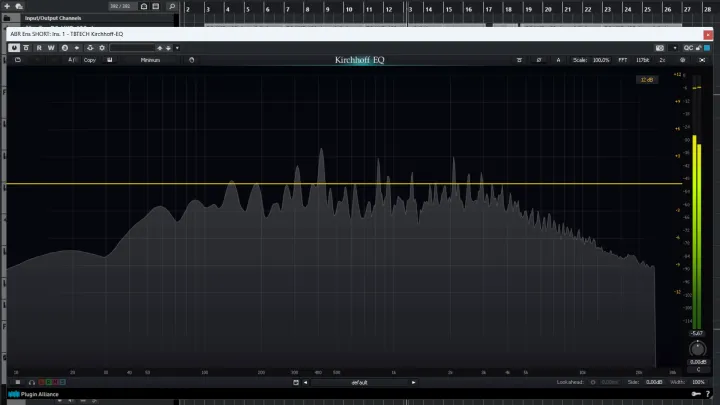
[Lappy] Plugin Galore, Guides, Stem Files and Tips
[Ryan Leach] Final Project Files, Sheets, Kits, Ananliysis PDFs and Checklists
[Ryan Leach] Refernce Tracks
Class Material Details
-
 [Lappy] Official File Of Track #1.2- Project file of finished tracks
- Samples used
- Plugins used
- DAW Friendly Presets -
 [Lappy] Lappy's Favorite Plugin Guides- Lappy's most used plugin guides
- Various tools, selected guides from Lappy's library -
 [Lappy] Stem Files from Original Lappy Tracks- Track stem files
- DAW-agnostic
- Processing, Automation and more.
- Drums
- Bass
- Keys, Synths, etc.
-
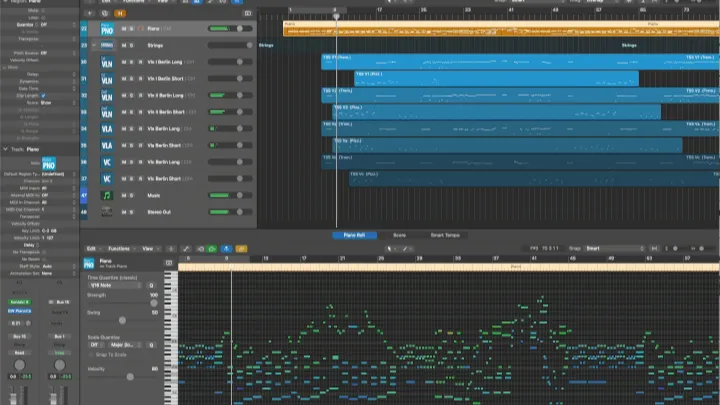
 [Ryan Leach] DAW Session and MIDI Files-The full Logic session for the
-Demo files
-Final Project orchestral composition
-MIDI files that you can drop into the DAW or notation software of your choice for deeper analysis and experimentation.
- A collection of MIDI files to inspire different rhythmic ideas and textures. -
 [Ryan Leach] Studio Ghibli Music Style Analysis PDFWhat makes music feel "Ghibli"?
-Characteristic traits of Studio Ghibli style music
-How you can incorporate those elements into your own work. -
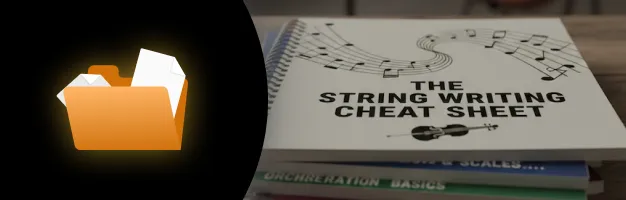 [Ryan Leach] Reference Sheets- The String Writing Cheat Sheet
- The Woodwind Writing Cheat Sheet
- The Brass Writing Cheat Sheet
- The Percussion Writing Cheat Sheet
- Beginner Composer's Checklist
Recommendation
Who should take this class?
Musicians
Who have always wanted to create their own music
but don't know where to start.
Learning Composers
Who have studied basic music theory,
but struggle to apply it to music that sounds like real game OSTs.
Creative People
Who are comfortable with digital tools
and want to create music for their own
games and projects.
Expert Music Composer Lappy & Ryan Leach 's Portfolio
Arknights : Zwillingstürme im Herbst OST - Der Hexenkönig
Arknights : Episode 14 OST - In Originium Covered Fields
Arknights : CC#3 Battleplan Extinguished Sins OST - Purification
Arknights 5th Anniversary Medley

Key to Anime & J-POP Music
C Major into Anime Harmony
Candy Jar Main Titles - Original Film Score from the Netflix Movie
Why You Feel Nostalgia

Why Take This Class?
You can know your scales, understand chords, and still sit in front of an empty DAW with no idea how to make the music in your head come alive. This class is built for that exact moment.
Lappy and Ryan Leach take you inside two very different composing processes, showing how a simple idea becomes a theme, how that theme grows into a full arrangement, and how emotion is shaped through harmony, rhythm, orchestration, texture, and sound design. Instead of teaching theory as the end goal, they show you where it belongs in the actual work of scoring a character, a battle, a quiet village, or an entire fantasy world.
You’ll also get the files they use along the way, including project sessions, MIDI, stems, reference tracks, harmony and texture tools, and practical checklists. The goal isn’t to leave with more information. It’s to leave knowing how to start a track, develop it, and finally finish music that feels like it belongs somewhere.

Get Ready for the Real-World
40 Class Exercises
Part 1. 13 Exercises with Lappy
-
DAW Architecture
-
Basic Harmony
-
Song Structure
-
Reference Analysis
-
Applying Analysis to Composition
-
Track Initiation Methods
-
Expanding Motif to Full Track
-
Space Filling with FX & Pads
-
Rhythm Understanding & Programming
-
Understanding Instrument Characteristics
-
Practical Instrument Layering
-
Aggressive Sound Design
-
Future Growth Roadmap
Part 2. 27 Exercises with Ryan Leach
-
 Compose snare drum solo
 -
 Compose for three pitched drums
 -
 Compose a folk song
-
 Compose an expressive melody
 -
 Compose with a repeated motive
 -
 Compose with clear two bar phrases
-
 Compose a melody in period form
 -
 Compose a melody in sentence form
 -
 Compose the melody for the final project
-
 Compose a melody with pedal tone
 -
 Compose a melody and bass line
 -
 Compose a melody, bass line, and add chords in-between
-
 Compose a melody, bass line, and add 7th chords
 -
 Compose harmony for the final project
 -
 Arrange piece for contrasting and similar colors
-
 Add movement and energy to your arrangement
 -
Add extra flair and spice to your arrangement
-
 Build the piece out into a longer composition
-
Add additional sections to your composition
-
Arrange the composition for the final project
-
 Orchestrate piece for strings
-
 Orchestrate piece for woodwinds, and again for strings with woodwinds
 -
 Orchestrate piece for brass, and again for strings, woodwinds and brass
 -
 Orchestrate piece for percussion ensemble, and again for full orchestra
-
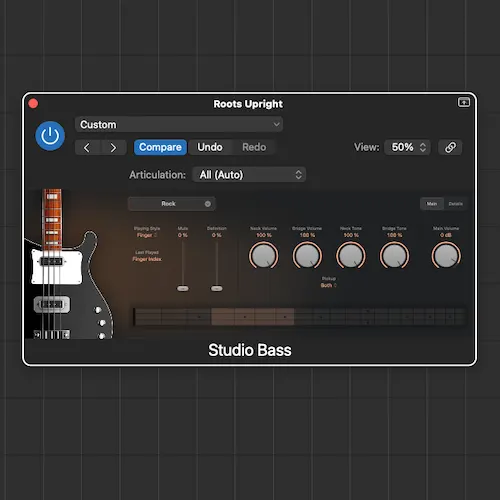 Orchestrate piece for “other” colors, and again for full orchestra with extra colors
 -
 Orchestrate the composition for the final project
 -
 Compose final project
Final Product Example(s)
Theme 1 Track
Theme 2 Track
*The above are samples for better understanding
-
Orchestrate piece for “other” colors, and again for full orchestra with extra colorsA Complete Orchestral Composition in a DAW
-
 A Complete Orchestral Composition in a DAW ver 2
 -
 A Complete Orchestral Composition in a DAW ver 3
 -
 A Complete Orchestral Composition in a DAW ver 4
*The above are samples for better understanding
Roadmap
Story to Sound Workflow
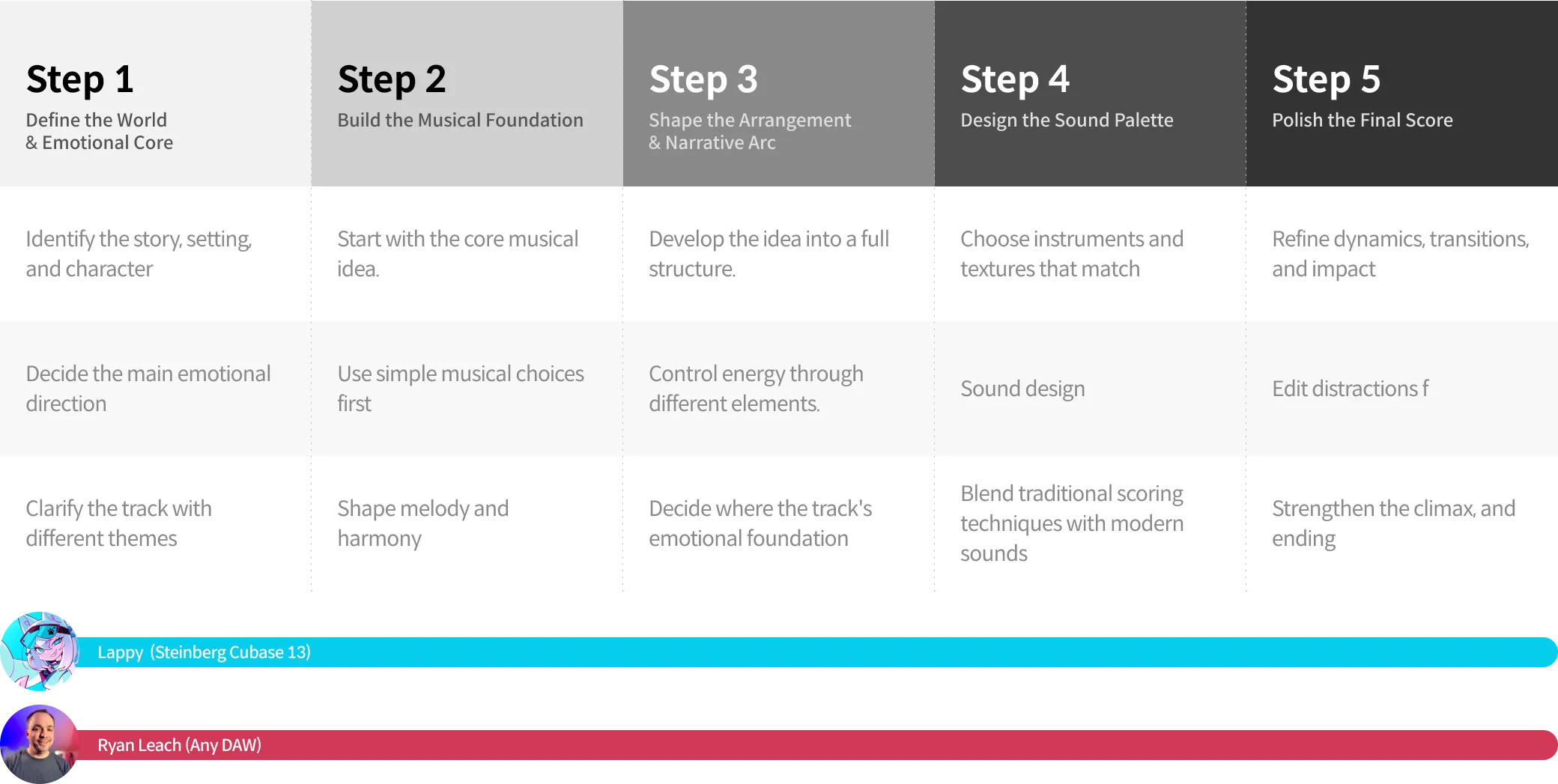

This CLASS has been carefully constructed
by the education experts at Coloso to provide a curriculum
that will help customers prepare to enter the industry.
Want to Take Our Individual Classes?
Cinematic OST: The Blueprint Behind Emotional Concept-Based Composition
Game Music Composer Lappy
A Start to Emotional Composition: Fantasy Animation/JRPG Scoring
Music Composer, Ryan Leach
Core Skills
For This Class
Emotional Scoring
-Turn scenes, characters, and stories into clear musical emotions.
-Use melody, harmony, rhythm, and pacing with intention.
-Build tension, release, nostalgia, wonder, grief, or intensity.
-Make music that supports the story, not just the background.
Musical Worldbuilding
-Create a sonic identity for games, animation, JRPGs, and fantasy stories.
-Match instruments, textures, and motifs to the world.
-Build themes for characters, locations, battles, and emotional moments.
-Combine orchestral, electronic, and cinematic sounds with purpose.
Complete Score Production
-Turn short ideas into full compositions.
-Build tracks with a clear beginning, development, climax, and ending.
-Arrange, orchestrate, layer, and refine each section.
-Move from rough sketch to finished score with confidence.
Highlights
Class Highlights
Narrative Expansion: From Concept to a Finished Track
Strong music starts with clear direction. You’ll learn how to define concept, mood, and emotional intent before writing notes. Starting from a simple melodic idea, you’ll expand it into a complete track through structure and development.

How to Write a Melody
Writing a great melody takes more than just using the right scale. You'll learn how to use the "active steps" of a melody, how to balance tension and resolution, and how two simple formulas will mean you never have writer's block again.
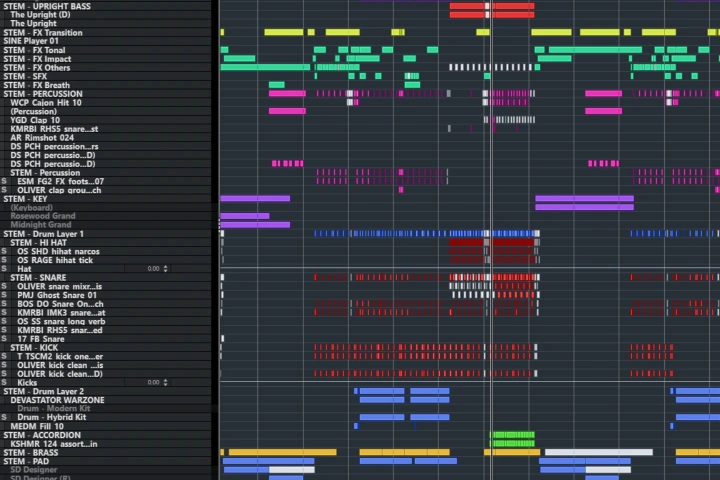
Modern Sound Design: Role-Based Layering & FX
This highlight focuses on modern, practical sound design rather than complex traditional theory. You’ll learn to think in roles and frequency ranges, allowing sounds to function clearly together. Through layering, FX, and controlled distortion, you’ll build depth, energy, and impact.