
Illustrator,Kunmang_건망 Details
Intro
Class Intro
Illustrator Kunmang
This class will teach you everything from drawing skills for trendy illustrations to making self-study plans and monetizing your illustrations.
A Crash Course to Level up to a Professional within 3 Years
Discover the study methods and practical techniques that made Kunmang a professional illustrator in just 3 years, all without an art degree. Kunmang, whose sold-out online classes and lectures have constantly earned rave reviews from learners, will guide you in building a solid foundation to ditch intuition and grow into an unrivaled illustrator who understands the true essence of art.
Class Perks
Get These Coloso Exclusives
-
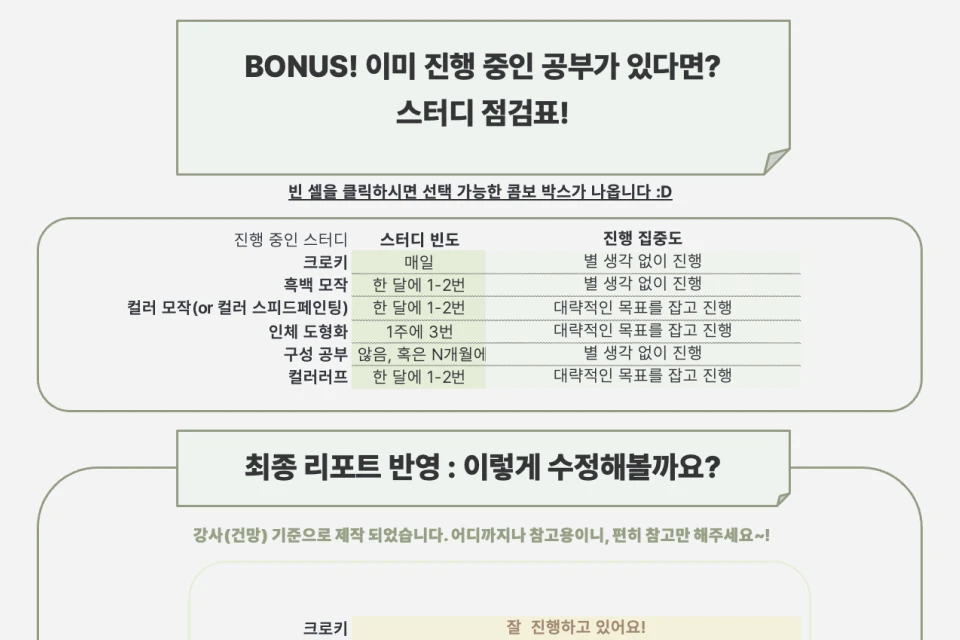 An automated self-study checklist to self-assess your drawing skills and get study method recommendations
 -
 Proportions for different types of stylization and original files that you can immediately use
 -
 Excel sheets with a real-world monetization table and market research for those wondering how to make a living with art
Full List of Class Materials
-
 Must-Have Materials and 23 Brushes for Aspiring Professionals- 631 pages of tutorials on fundamental theory (.pdf)
- 7 pages of tips for making full use of recommended tablet devices (.pdf)
- A summary of how to utilize lectures (.pdf)
- 16 Clip Studio brushes and 7 Photoshop brushes -
 Materials for Mastering Constantly Shifting Trendy Art Styles- Body proportions table with samples of front, side, and back views (.pdf)
- Front-facing faces of various proportions (Semi-realistic) (.psd)
- Exercise on stylizing varied faces
- Exercises on stylizing varied faces and simplifying faces into shapes from different angles (.psd and .clip)
*Includes symmetrical and perspective rulers
- Facial proportions table (.pdf)
- Facial proportions board (.psd)
- 2 different coloring processes based on art styles - Color palette for coloring faces (.psd) -
 Resources for Surviving in a Sea of Illustrators- A self-analysis list for setting goals
- A self-checklist for study *With an automated skill analysis table and study routine recommendations
- A 12-page routine recommendation list for different case studies
- A business pipeline table for freelancers (.pdf)
- A sheet for researching the commission market (.xls)
Recommendation
Who Should Take This Class?
Beginner- to intermediate-level learners who want to quickly improve their illustration skills while developing their own style
Aspiring freelance illustrators looking for ways to make a living with their art
Learners who want to improve their work efficiency and artwork using 3D programs and various assets
Expert Illustrator Kunmang's Portfolio








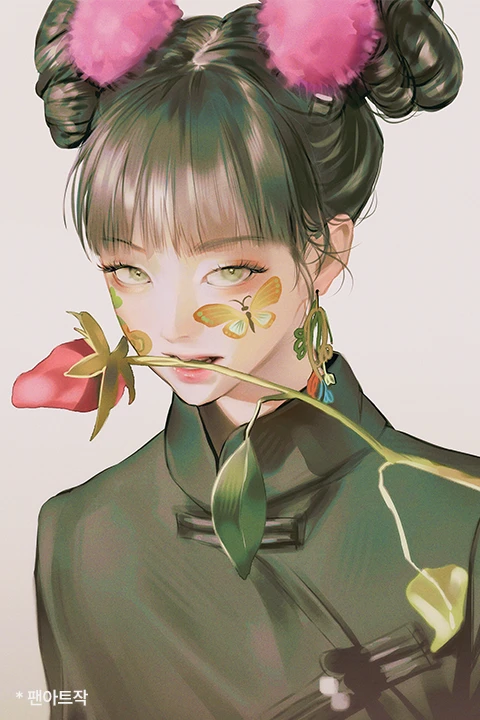
Why Take This Class?
The Shortcut to Becoming a Pro the Easy Way
Presenting the shortcut to setting up your own goals and turning pro faster than numerous other illustrators! With this class, you’ll formulate your own self-study plan that allows you to objectively evaluate yourself and work on your weaknesses, figuring out what and how you should study to become a better illustrator, where you need to improve, and more.
The curriculum covers all the essentials you need to know as a freelance illustrator, including useful real-world skills like managing layers, correction techniques, researching the commission market, a guide to the actual commission process with provided examples, and designing a monetization pipeline, as well as the mindset required to keep creating artwork and how to overcome slumps so that you don’t get lost on your journey to becoming a pro.

9 Class Exercises
Part 1. Tutorials on Turning Pro and Self-Study Plans
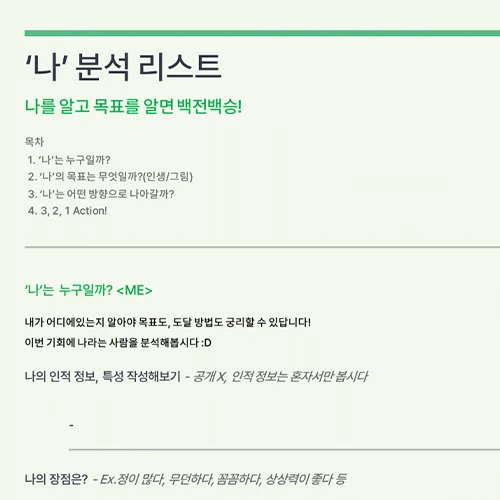
Overcoming Self-Studying Challenges
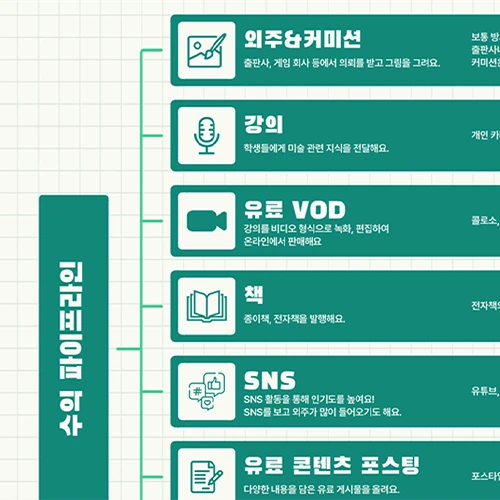
A Monetization Pipeline for Illustrators

Study Methods and Styles for Illustrators
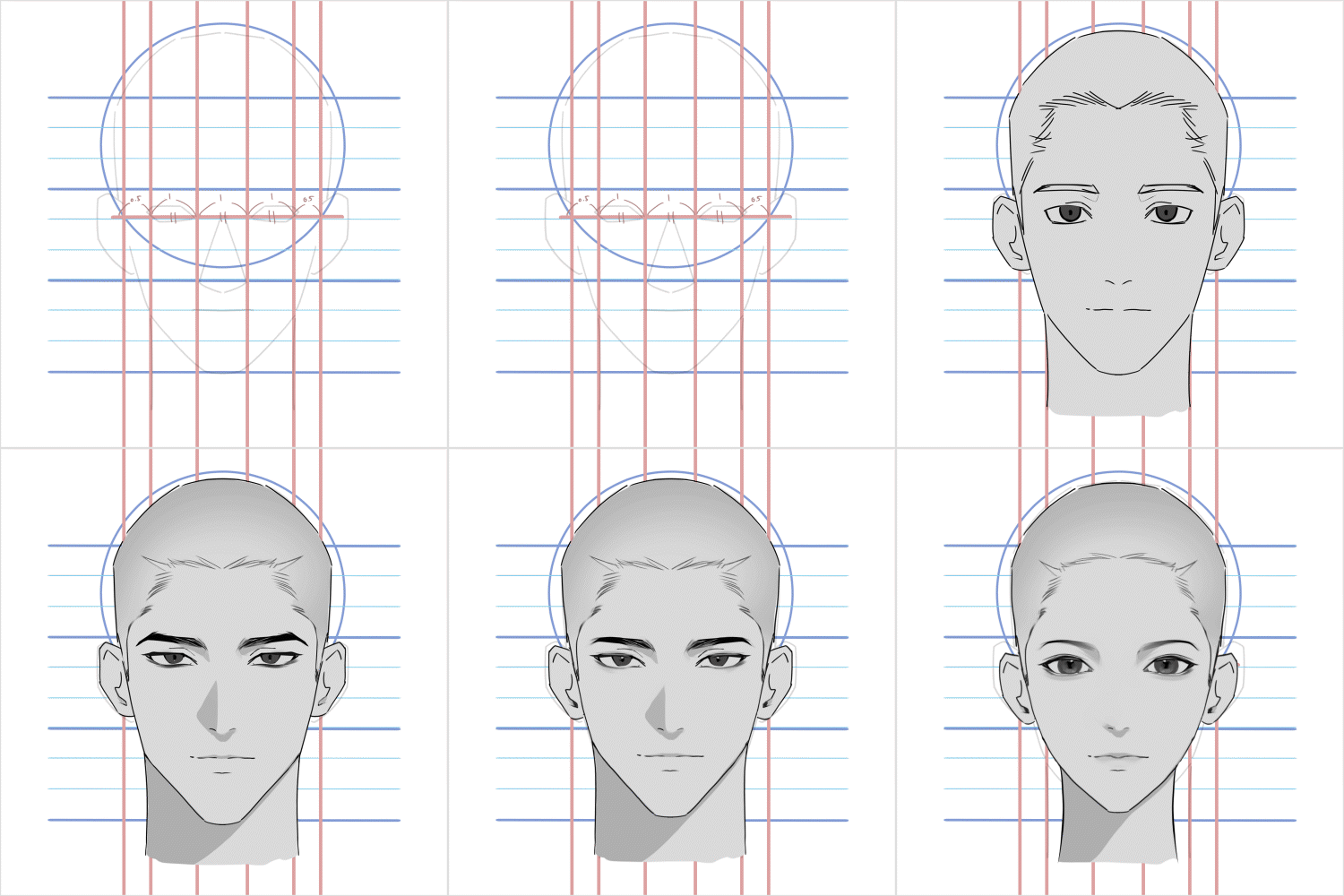
Understanding Art Styles: Stylization
Part 2. Drawing Faces that Match Current Trends

Drawing Various Trendy Faces

Perspective Basics to Understand Three-Dimensionality

Dividing the Silhouette and Layers of the Hair

How to Create More Attractive Facial Features
Part 3. Tools and Programs Used in the Field

How to Work with Clip Studio’s 3D Assets and External Programs
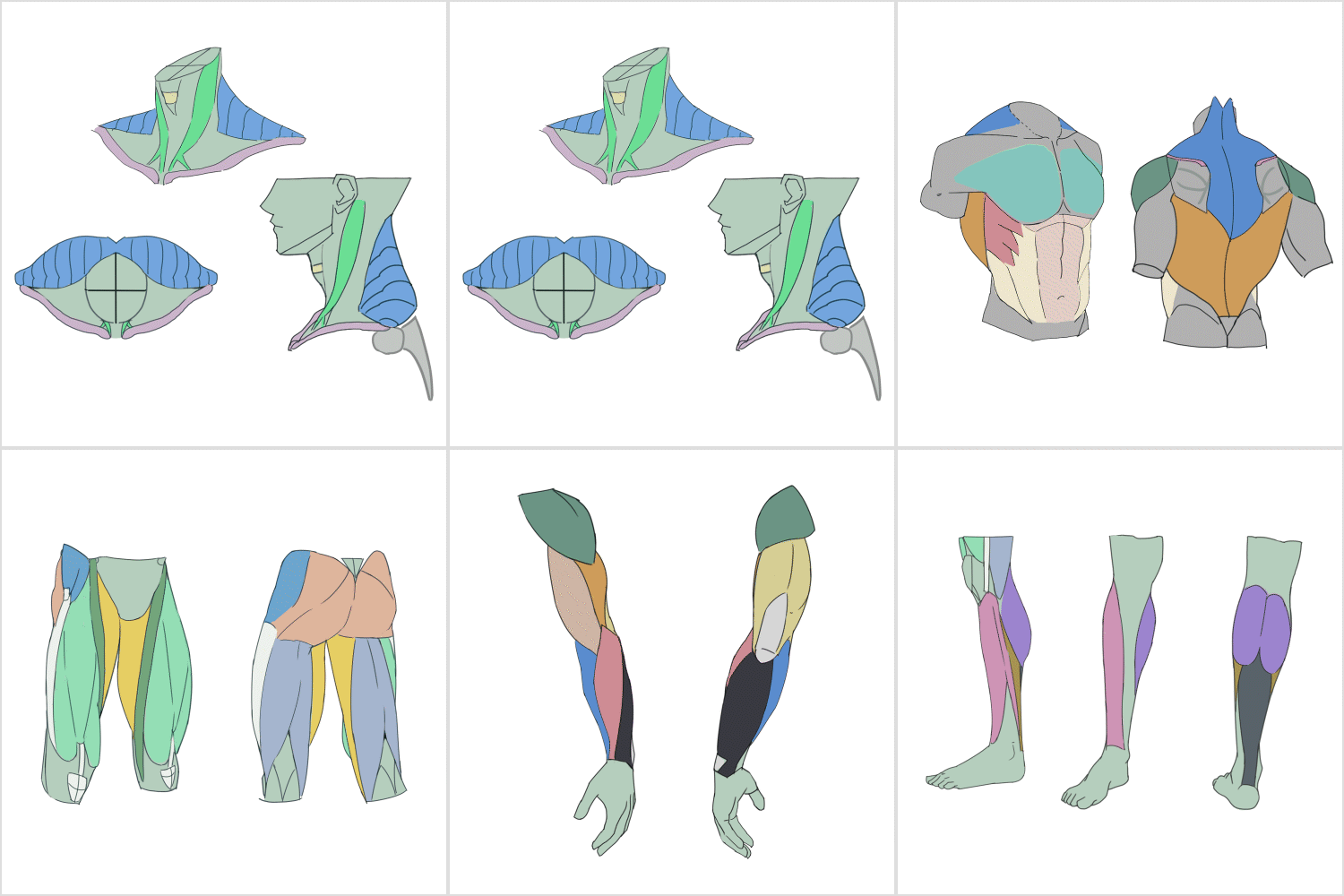
Frequently-Drawn Landmarks and Muscle Movements

Study Methods for Mastering Fabric Folds
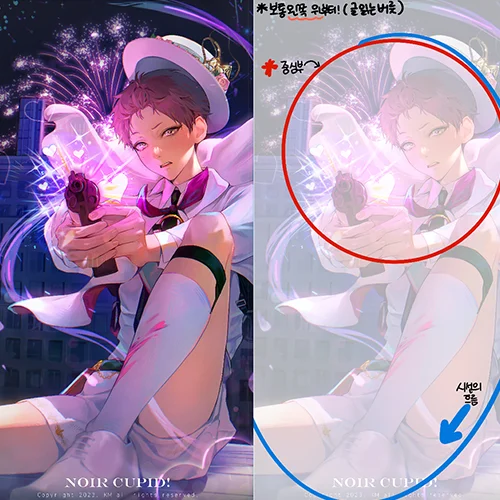
Flow and Composition for Impactful Illustrations
Part 4. Coloring Basics and Application

The Easiest Approach to Glazing

Coloring Radiant Skin in Various Colors

Semi-realistic Coloring in 10 Minutes

The Anime-Style Coloring Process (Expanded Ver.)
Part 5. (Practice) Mastering Normal and Cover Illustrations

Illustrating Colored Rough Drafts Using 3D Tools
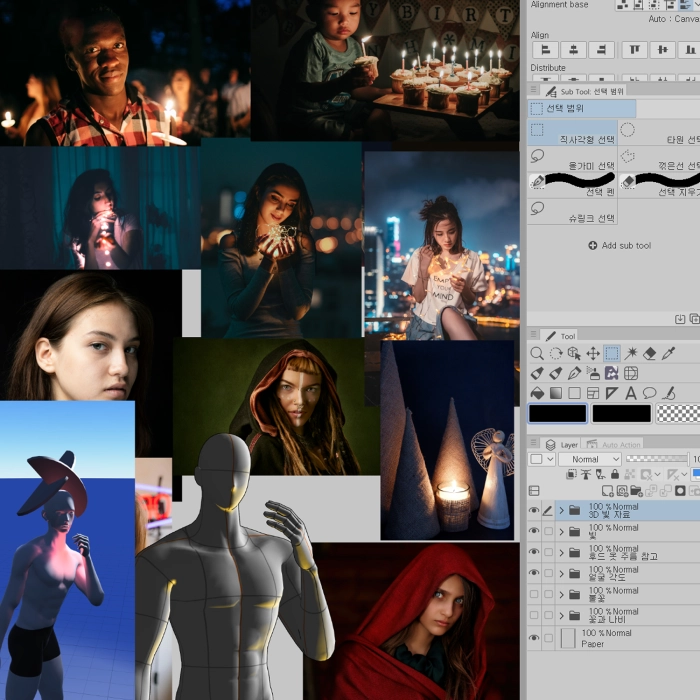
Creating and Making Full Use of Moodboards

Turning 3D Assets into Illustrations

Effective Correction Methods
Final Output

One-Character Illustrations

Two-Character Illustrations for Web Novels
*Includes typography exercises
Instructor
Illustrator
Kunmang
Hello. My name is Kunmang, and I’m a freelance illustrator exploring the essence of art. Since I was in school, I’ve had a thirst for asking “why?” in regards to various art. I felt I wasn’t given clear guidance as to why I should learn things like croquis drawing, imitation, and perspective, as well as how I should approach them. Most of these concepts were explained through “intuition,” but that didn’t mean much to me.
In order to get rid of that ambiguity, I embarked on my own journey to explore the essence of art. Through that journey, I discovered and tried out various study methods and went pro in just three years without an art degree. This class features a unique insight into art, incorporating systematic strategies built on the knowledge I gained through majoring in business administration and mixing it with the genre of art. I sincerely hope that it serves as a helpful tool for you to figure out your path as a creator.

Student Reviews
Reviews of Kunmang’s In-Person Classes
-
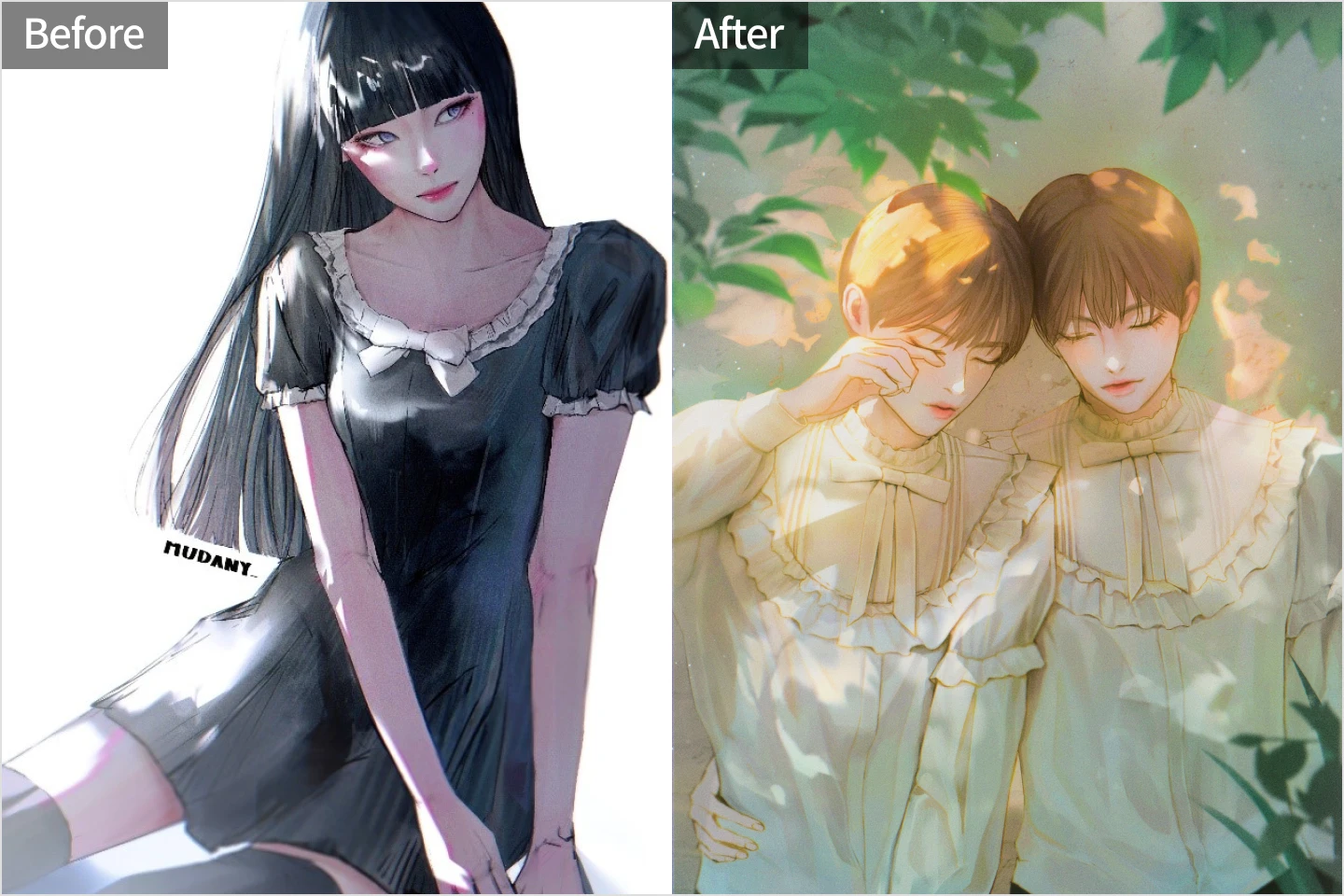 Student AAs a self-taught illustrator herself, Kunmang makes it easy for learners to understand how they should improve their skills. Her class provided new insights for me to develop basic skills on my own rather than focusing only on techniques, which made it extremely worthwhile. I recommend this class to those who want to gain the ability to create complete illustrations by fleshing out ideas in their heads with different methods like colored rough drafts.
 -
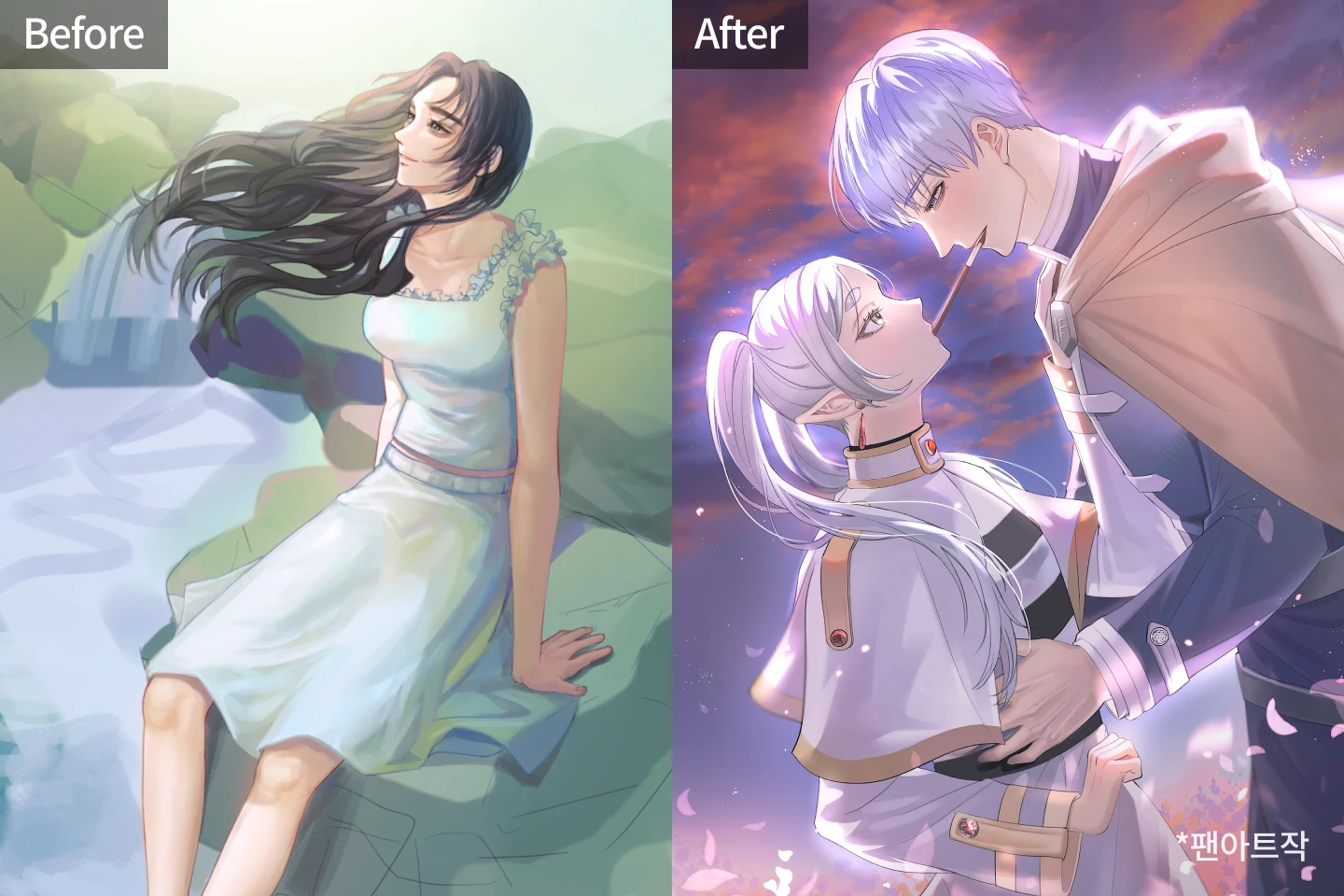 Student CI always thought my illustrations looked unclear, odd, and insufficient in some kind of way, but I could never figure out why. This led me to frequently put them aside due to feeling hopeless. Since this class provides well-organized folders of materials, I was able to identify my weaknesses and work on them by myself. The instructor’s guidance on how to study each part of the class greatly helped me improve my skills.
 -
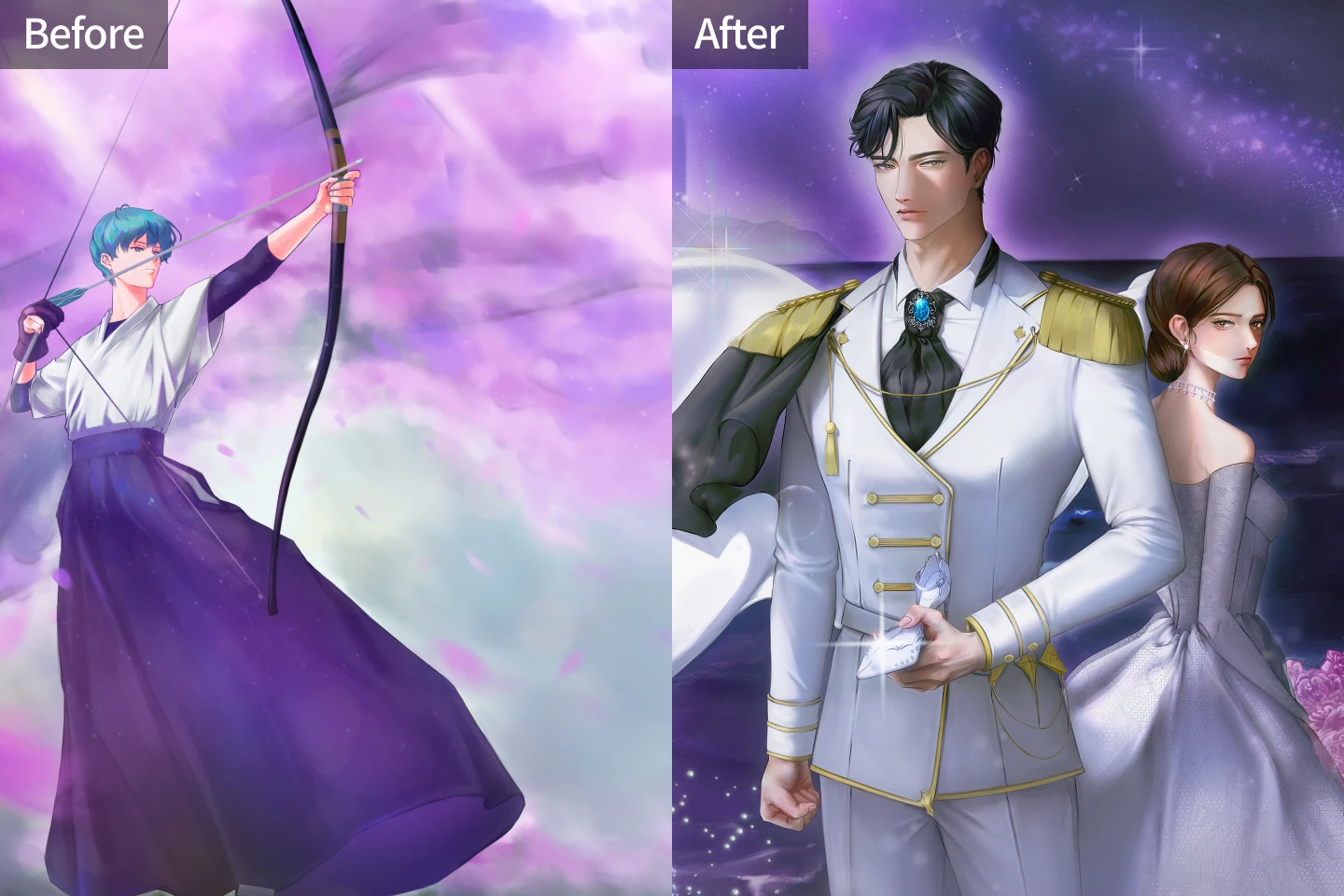 Student ESince I was pretty late when I started illustrating, I felt like an imposter and easily lost confidence. But Kunmang’s advice that “art has no wrong answers, but only different styles” gave me the motivation to pursue my goals by creating whatever I want. As I learned to understand how I should approach illustration in a step-by-step way, I started enjoying the process so much more, which naturally gave me more confidence.
 -
 Student BI spent the last two years studying on my own with an ambiguous goal of becoming an illustrator. But with Kunmang’s class, I was able to finally draw up a systematic route for learning, which even makes what I did in the past feel like a waste of time. I’m getting closer and closer to my goals as I build a strong foundation and learn various techniques required in the field.
 -
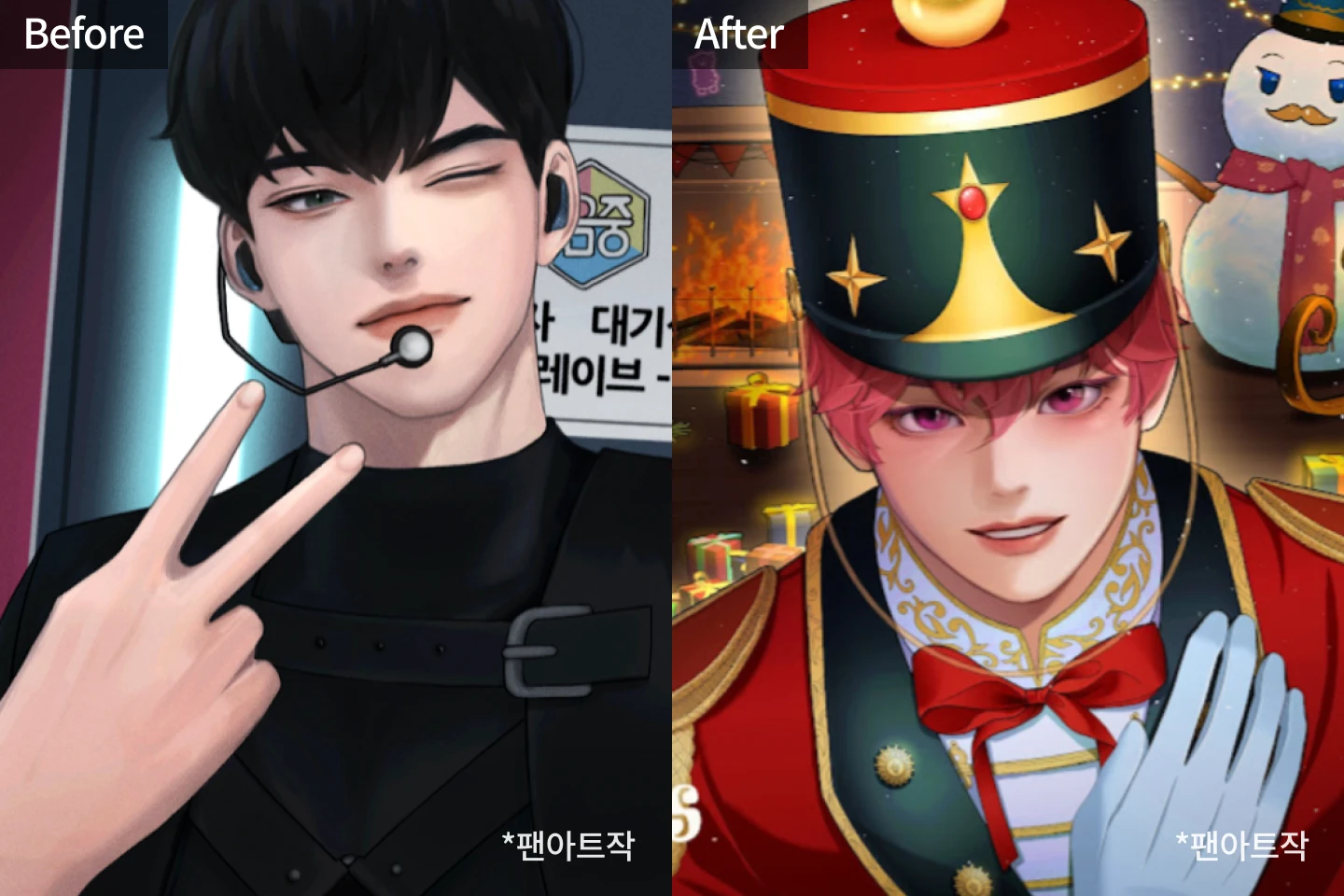 Student DBefore taking this class, I tended to focus on the “face” and nothing else, so I always drew them by fixing their flaws and only drew from certain angles. This class, however, taught me skills so that I could enjoy drawing with different elements such as light, fabric folds, lines, three-dimensionality, and other materials that I used to avoid because I wasn’t good enough.

Illustrator Kunmang
[Current]
Freelance Illustrator
CEO of JamaeEKA STUDIO
Recognizable Projects & Awards
[Participating Project]
I'm not a healer?, Web novel cover illustration
Easy Love, web novel cover illustration
I Want to Break Up, but You Say You Have Amnesia, Web Novel Cover Illustration
Olivier Dampierre proposed to the maid! : Side Story, web novel cover illustration
Deep in the Mud, web novel cover illustration
The Devil Wants Peace, web novel cover illustration
Perfect Buddy, drama CD cover illustration
Project collaboration with [0100 Design Studio]
Many other unreleased works
Highlights
Class Highlights
A Tailored Study Roadmap and Routines to Quickly Reach Your Goal
While there are many ways to study art out there, such as croquis, plane drawing, and imitation, it’s not easy to find the right approach for you. To help you stay on track, this class shows you how to draw up a study guideline precisely tailored to your level of skills and goals, type by type. Once you build a clear understanding of what you need to work on, in what order, with what kind of approach, and why you should do it that way, you will learn how to tailor what you learned to your own style and apply it in practice.

Practical Tips to Instantly Change Your Workstyle
Find out how to work with perspective rulers, external programs, and other practical tools to understand complicated, difficult art theories such as perspective, the human figure, and light and shadow, and build your own skill sets for real-world application.

Monetization Pipeline and Strategies for Earning a Living with Your Art
As a freelance illustrator who turned pro in just 3 years and who is still leading a successful career, Kunmang provides answers to frequently faced difficulties by those working to become freelance illustrators. Learn the shortcut to achieving consistency and stability as an illustrator.

Class Details
You'll Learn
-
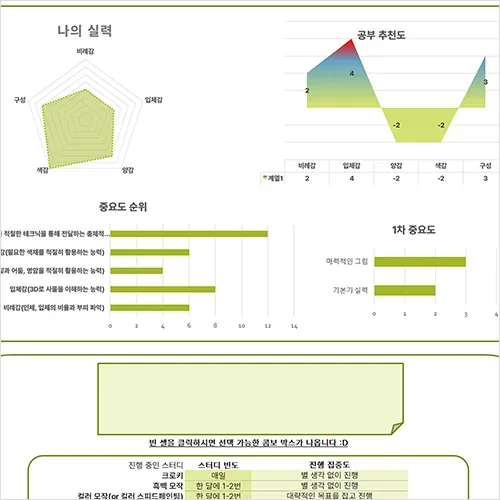 A Self-Checklist and Recommended Study Routines for Self-Studying IllustratorsThe first step to achieving maximum study efficiency is to have an objective understanding of yourself. With this self-checklist, you’ll be able to understand your study style and learn how to develop study strategies that improve your skills in the shortest time.
 -
 Making Fast-Changing Trends Yours: Characteristics of Different Art Styles and Advanced Drawing of Faces and HairBlindly following current trends can make your work look out of style once the trend passes. Learn how to understand the fundamental characteristics of different art styles and proportions, and draw the facial features you want using simple changes and makeup skills to create appealing characters.
 -
 Immediately Applicable Correction Techniques and the Secret to Transforming an Illustration’s MoodLearn correction techniques that you can immediately put into practice, as well as how to set up lighting in illustrations. Work with complicated layers and features to change the overall mood of an illustration to your liking, as well as more advanced techniques for using external programs and assets.
-
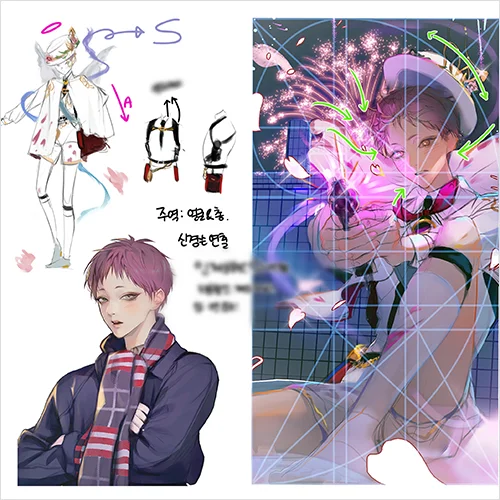 A Step-by-Step Illustration Approach to Complete Unfinished WorksEven with a great rough draft, it’s common to give up on an illustration when you have to add details such as lines and color. Discover systematic planning strategies that divide the illustration process into steps so you can fully complete your artwork.
 -
 Getting the Most Out of 3D Tools to Make Perspective EasyStudy smarter and quicker ways to improve the quality of your artwork. Create and arrange 3D human figure assets that match your art style and reprocess them for illustration, discovering how to boost the efficiency of your work process and give an even more finished look to your work using 3D tools.
 -
 A Strategic, Realistic Roadmap for Illustrators Aiming to Turn ProGet practical advice on how to keep creating artwork even when you face personal and financial challenges as a creator. Learn about the required mindset to overcome slumps and create sustainable revenue so you can build a solid career and find the motivation to keep creating.
- Unlimited Access
- Best Price
Buy now, get unlimited access.
12/31 (Sat) (UTC-7) Special offer ends soon.
This special offer ends soon.
Buy now and save!
Class Preview
Watch Chapter 6 from Kunmang’s Online Crash Course in Illustration!
6. Lines Don’t Exist?: Understanding Art Styles
1. What is stylization? (Anime-style and Semi-realistic)
2. Figuring out your style
3. Useful tips for developing your own art style
*The Korean language content in this class preview is translated into English in the class videos.
**The subtitles in this preview video are auto-translated. Please note that some content may not be accurately translated.
***Associated content is subject to change without prior notice.
Curriculum
Curriculum
In-Depth Look
SECTION 01. Orientation: The Journey from Self-Studying to Turning Pro
01. The First Step to Overcoming the Challenges of Self-Studying
- Instructor introduction
- What does “intuition” mean in illustration?
- How this class will satisfy your curiosity
- Equipment and programs used in this class
02. Making Full Use of This Class
- How to use each chapter to suit your needs
- The 3, 2, 1 rule of execution
- How to improve your skills fast
03. How Does a Freelance Illustrator Make Money?
- The driving force behind drawing motivation
- The pipeline to monetize your illustrations
SECTION 02. Why are Basics Called “Basics”?: Taking the First Step
04. Why Do You Have to Study the Basics?
- What do basics mean?
- The relationship between the basics and popular art styles
- The important ability to create forms
- Looking into the challenges of self-study
- Identifying your strengths and weaknesses *With a self-checklist
05. Building Your Own Study Routines
- Prioritizing “studying” and drawing
- The ability to create forms and observational skills
- Building routines through case studies
06. Lines Don’t Exist?: Understanding Art Styles
- What is stylization? (Anime-style and Semi-realistic)
- Figuring out your style
- Useful tips for developing your own art style
SECTION 03. Section Title
07. [Basic] The Human Figure as Shapes and Ideal Facial Proportions
- Trendy body proportions and joints as shapes
- Common figure drawing mistakes and how to correct them
- Trendy facial proportions and curvature
- Key points in facial proportions
08. Drawing Faces with Varying Proportions and Angles
- The perfect proportions applicable to any art styles
- Characteristics of faces that are currently seen as trendy
- Figuring out why your illustrations always look different
- Drawing faces from various angles by understanding three-dimensionality
09. BONUS: Perspective Basics to Grasp Three-Dimensionality
- What is perspective?
- Why perspective is difficult
- 1, 2, and 3-Point Perspective
- Setting up perspective in Photoshop and Clip Studio
- Vanishing points varying by angle
- Creating a face box in three-point perspective
10. “Layers” are Everything?: Understanding Hair
- Dividing the silhouette and layers of the hair
- Locating the roots of hair
- Common mistakes when drawing hair
- References that confuse you
- References have an order, too!: How to use references
- Tips for drawing more advanced hair
11. [Practice] Small Changes That Make Facial Features More Appealing
- Kunmang’s stylization techniques for drawing beautiful faces
- How the starting point of the nose changes the face
- Depicting eyes and lips
- Depicting faces and hair while developing your art style
SECTION 04. [Advanced] Tools Used in the Field and Drawings
12. Recommendations of 3D Tools and External Programs Used in Real Commissions
- Building the human figure and composition with 3D assets in Clip Studio
- Recreating the lighting reference (3 lights) using Magic Poser and how to apply it
- Making a photo look like a drawing using FotoSketcher
- Application techniques used by artists
13. Frequently Drawn Landmark Muscles and Movements
- Parts that you’ll draw most often: the neck, collarbone, and shoulders
- Front of the upper body: abs and movements of the chest and shoulders
- Back of the upper body: back muscles
- Lower body: hip and thigh muscles
- Understanding how joints and muscles move: arms and legs
- Bonus: How to draw hands easily
14. The Basics of Fabric Folds and the Study Order You Need to Memorize
- What are folds?
- Three fundamental principles of folds
- The study order to master fabric folds
15. If Your Illustrations Look Boring Taking a broader view: flow and composition
- Identifying problems by zooming out on illustrations
- Creating impactful illustrations
- Techniques for clarifying your message
- Colored rough drafts: the blueprint for your illustration
SECTION 05. Basic Coloring: Applicable to Countless Purposes
16. Glazing for Beginners: Black and White Basics
- Separating brightness and color
- There’s no such thing as a shadow?
- Super easy layering of light and darkness
17. Tips for Coloring Skin and Adding Details to Faces with Just Three Layers
- Easy primary coloring of skin using color layers
- Adding a flush with SSS
- Adding details to faces
- Saturation adjustment for clear, flushed-looking skin
SECTION 06. Coloring Practice: The Coloring Process You’ll Use during Your Entire Career
18. Instantly Transform Any Mood!: Various Lights Explained with Hands-on Exercises
- How to manage and organize layers
- How to choose the color of light and shadow
- Showing light using shadow
19. 10-Minute Coloring: A Semi-realistic (and Volume-Centered) Coloring Process
- Who should use this process
- Splitting darkness step by step
- Adding highlights and occlusion shadows
- How to finish coloring in 10 minutes
20. The Anime-Style (Color-Centered) Coloring Process Bought by 800 People in the First Month (Expanded Ver.)
- Who should use this process
- Using references to work with multiple lights
- Defining the nature of key lights, fill lights, and reflected lights
- How to mix anime style with the semi-realistic process
21. Correction Tips You Wouldn’t Want Others to Know
- Four layer effects for when bright light falls down
- Three ways to add color to dull tones
- How to depict shining objects with specular reflection, including leather, satin, and latex
- Tips for arranging elements like frill, clothing patterns, and lace
- How to draw wet clothes quickly and easily
SECTION 07. Practicing the A-to-Z to Complete an Illustration
22. Developing Concepts and Themes for Illustrations
- The importance of colored rough drafts
- Step-by-step file saving that prevents saving-related accidents
- Ideation using random keywords and writing
- How to find and organize resources
- Creating and developing two drafts
23. Using Resources to Boost Your Skills beyond Their Limits
- How references work and why they’re important
- Finding your own ways of referring to 3D resources
24. Drawing and Coloring Illustrations
- What you should think while illustrating
- Tips for turning your artwork into merch
SECTION 08. One Step Closer to Becoming a Pro! Mastering Cover Illustrations
25. The Formula for Illustrating Web Novel Covers
- Analyzing commission requests
- Finding resources based on the request
- A work process that dramatically reduces mistakes
- Practical layer management skills
26. Tips and the Process for Illustrating Covers, Especially for Commissions
- Elements frequently used in romantic fantasy
- Adding various patterns with the Liquify tool
- Depicting materials through changing metals
- Material processing that speeds up the work process
27. Improving Quality through Depiction and Correction
- How to use correction layers
- Working with texture and effect images
- The process of correction
- Looking into the usage of the Curve tool
SECTION 09. A Message to Aspiring Freelancers
28. The Secrets to Boosting Your Growth to Take Commissions
- The golden ratio of studying
- Commission analysis skills for quick monetization and gaining popularity
- The WMW rules for growing your social media presence quickly
29. Building a Business Roadmap: How I Made 10 Million Won Monthly Just Three Months after Building My Roadmap
- Combining and emphasizing your strengths
- Expressing through writing and drawing
- Applying and utilizing content
- Turning your weaknesses into strengths
30. How Web Novel Cover Commissions are Done and Q&A
- A complete summary of the process for web novel cover commissions
- Price? Guidelines? Black? What you should watch out for!
- Enhancing the value of your brand through small changes
SECTION 10. The Formula for Moving Forward Beyond the Canvas
31. The Mindset Required to Keep Drawing
- Solutions for slumps and the law of zoning out
- Tips for preventing burnout
32. The Top 48 Questions and Mistakes
- Q&A on studying art and skills
- Q&A on mindsets
- Q&A on financial plans
33. What Matters the Most in Illustration
- Before wrapping up the class
*The release date of this class, curriculum images, and associated content can be changed without prior notice.
** Class videos may be separated for a more streamlined viewing experience
Interview with
Illustrator Kunmang

Question.01
Why did you choose this specific topic?
As someone who picked up drawing late, I found vague expressions like “intuition,” “just do it,” and “talent” extremely frustrating. Desperate for a systematic study method that went further than just saying, “Just do it like this,” I went through a lot of trial and error and eventually learned a logical, step-by-step approach that helped improve my skills. I designed this class with the idea of being a mentor for those who want to understand the fundamental essence and objectives of studying art in mind. Once you decide what to do, the rest is quite simple. I want to help you concentrate solely on reaching your goal, all at your own pace.
Question.02
What makes your class different from other classes?
The class guides you to immediately apply the study strategies you learn to deliver the best results with minimum effort. If you don’t have strong sources of motivation and struggle with keeping consistent, you’ll eventually lose interest in art. This class helps you clarify the cause of such problems and solutions to solve them. I’ve packed all my knowledge into this class—so much so that I almost never stop talking during the lectures! You can watch them over and over to develop and master different sets of illustration skills.
Question.03
What would be the most important takeaway from your class?
I designed the class curriculum to cover hard skills that immediately boost efficiency, as well as soft skills for long-term growth so that students can gain a wide range of abilities and skills and turn their hobby of illustrating into a career. The class provides students with practical tips like organizing layers, working with three-dimensionality and free images, processing assets and backgrounds, and correcting metal materials, as well as drawing croquis to build observational skills, principles of light and shadow, rules for combining different colors for skin, and other tricky theoretical concepts. I have also put together all kinds of practical information students will need as an illustrator, including a career roadmap for illustrators, how to write proposal emails, the process of taking a commission, researching the commission market, and more.
Question.04
What’s the reason you recommend glazing techniques to beginner students?
Beginners feel lost when creating illustrations because they try to get everything done at once without any knowledge of theoretical concepts like light and shadow, color, and form. Glazing divides those difficulties into multiple stages so you can focus first on finishing light, shadow, and form, then move on to adding color. Through this process, you can quickly understand each step of the work process and improve your weaknesses. It can also be applied to various styles, from anime to semi-realistic, helping you broaden your art spectrum. I myself dramatically leveled up my skills after using glazing techniques, and I’d like to share this expertise with you through this class.
Required Programs
This course will use Clipstudio PRO 2.0 and Adobe Photoshop 2020.
Please purchase and install these program(s) for an optimized class experience.
* Other compatible versions: Clip Studio PRO 1.0, Photoshop 2020, or an older version of the program
* These programs and/or materials will not be provided with the course.