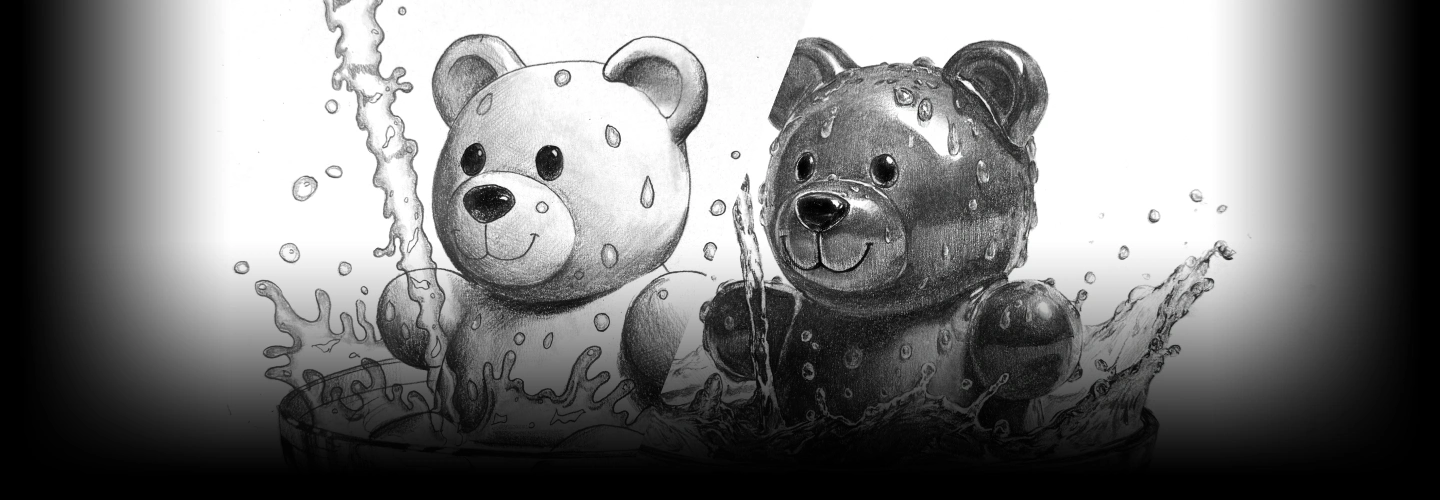
[Asset]illustrator,jinseoklim2_임진석2KR Details

Now in Your Language, Only on Coloso!
Learn from Top Creative Experts Worldwide
-
 Drawing Diagnosis & Correction
 -
 Mastering Light & Structure
 -
 Texture Rendering Techniques
Class Preview
Still Not Sure?
Check Out Jinseok Lim's Class Preview!
Asset Intro
From Diagnosis to Mastery: A Complete Drawing Revision System
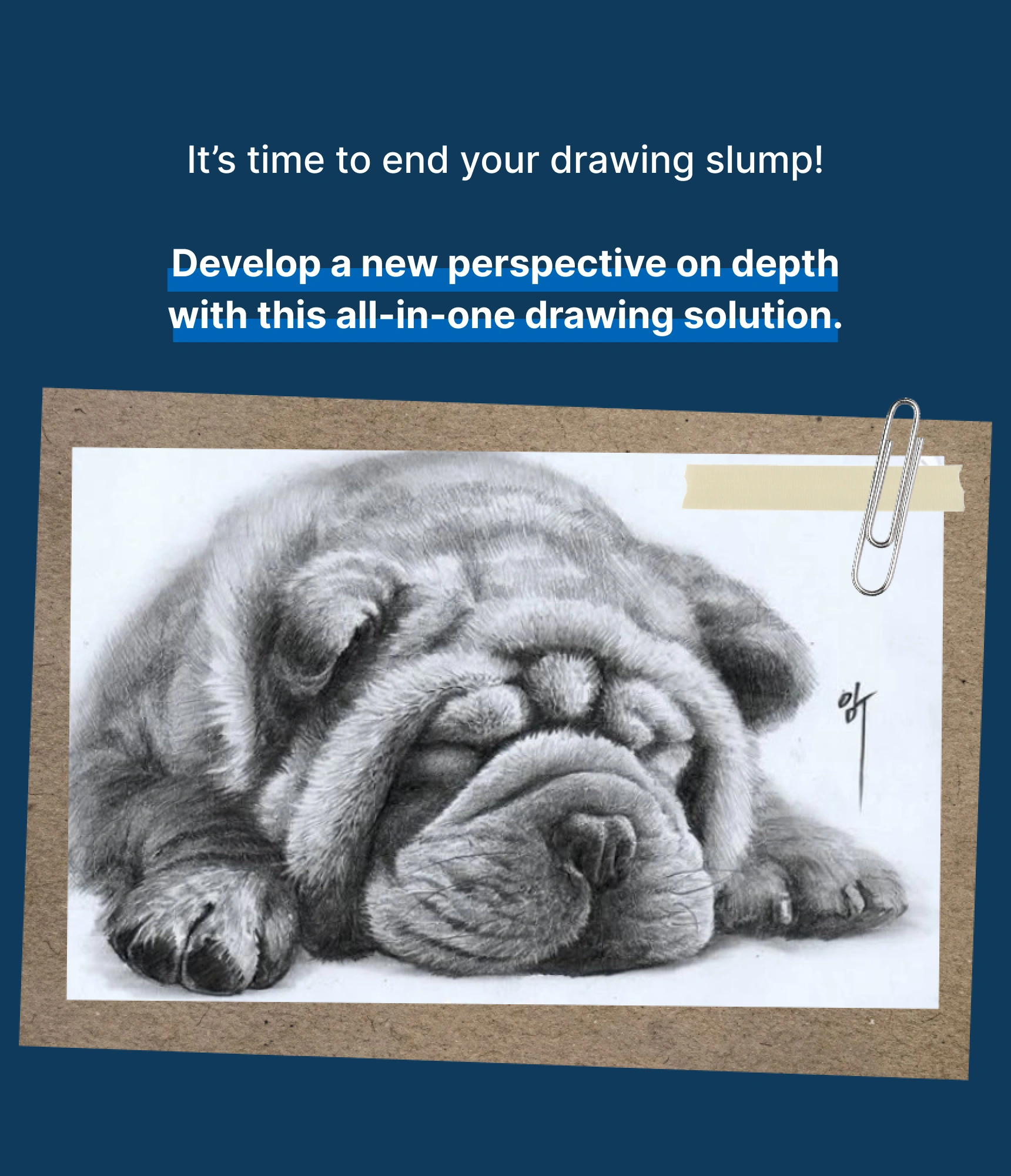
Delve into a dimensional drawing solution for both professional work and creative practice! Built on 20 years of teaching expertise by Jinseok Lim and real student feedback data, this program presents 8 key breakthroughs to help you overcome drawing challenges with clarity. From theory and demonstration to corrective practice, experience a drawing revision workbook & VOD system designed to drive a clear growth curve!
Asset Package
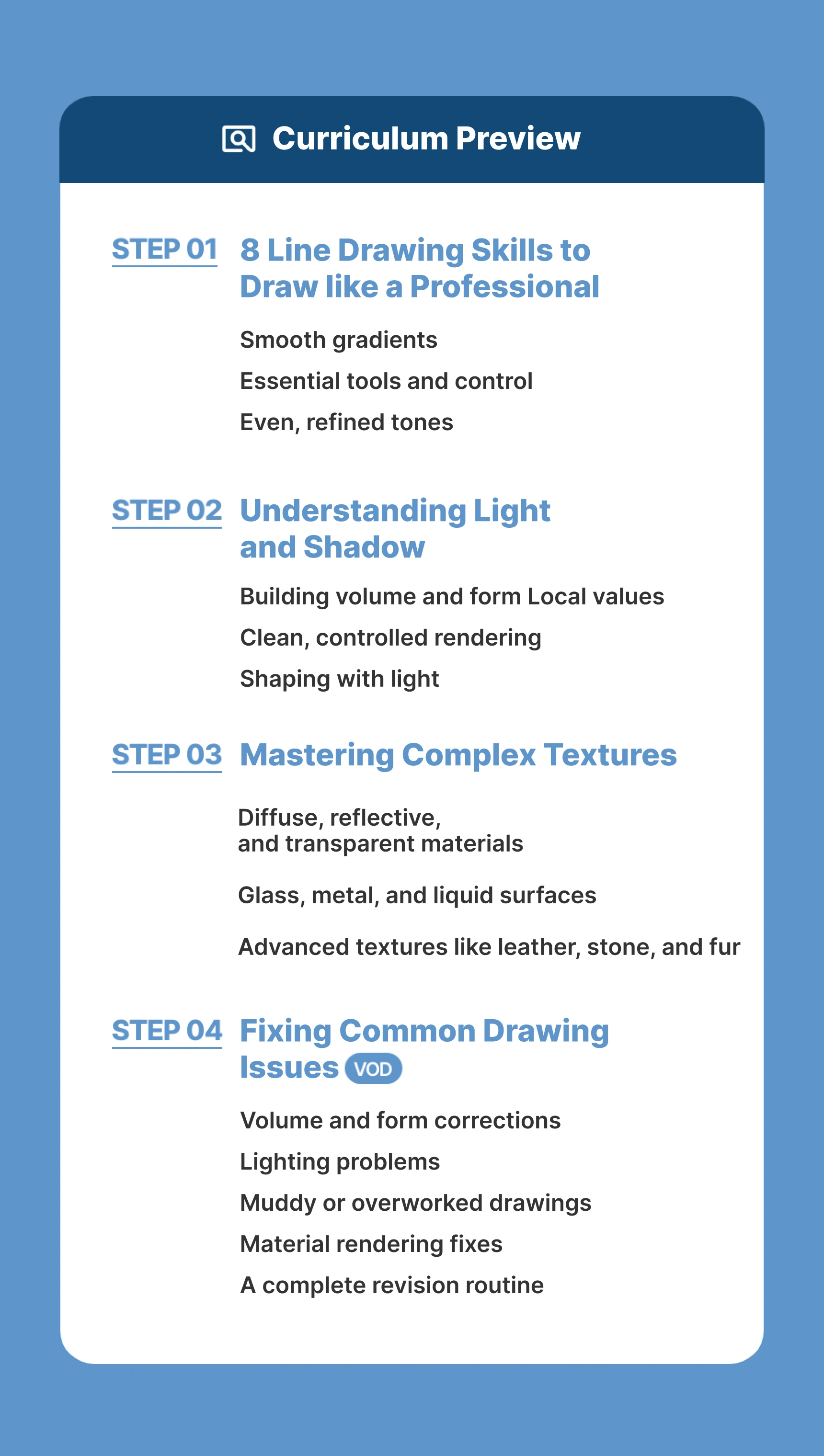
8-Step Breakthrough Program to Expand Your Drawing Skill
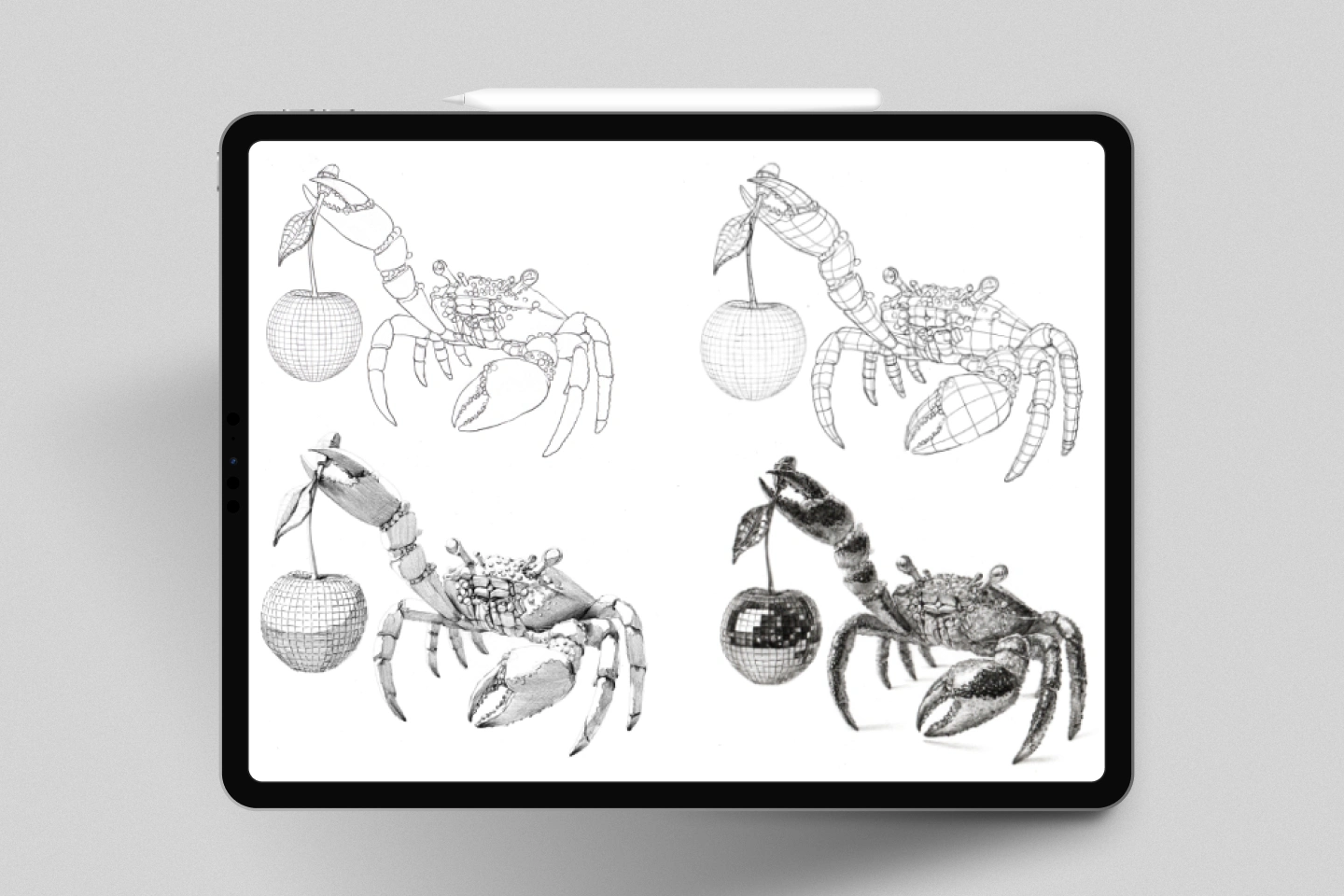
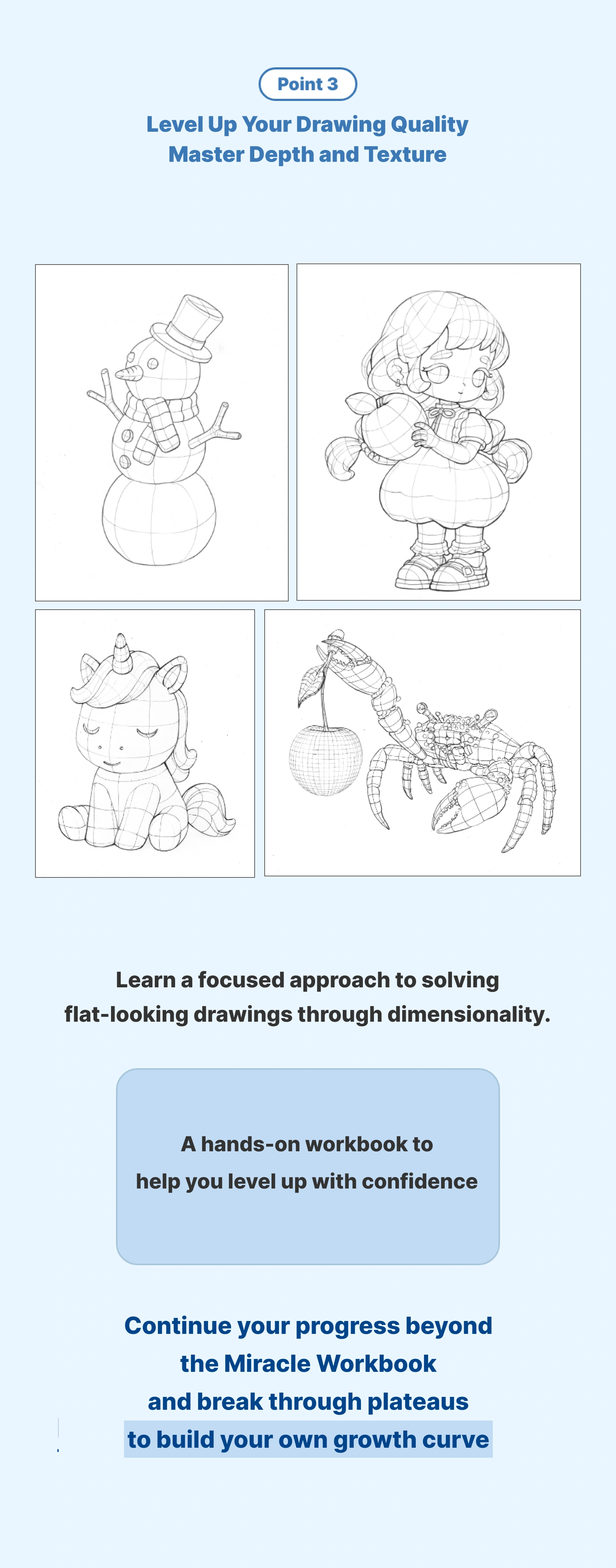
Dimensionality-Focused Revision Workbook PDF
for identifying issues and improving your drawings
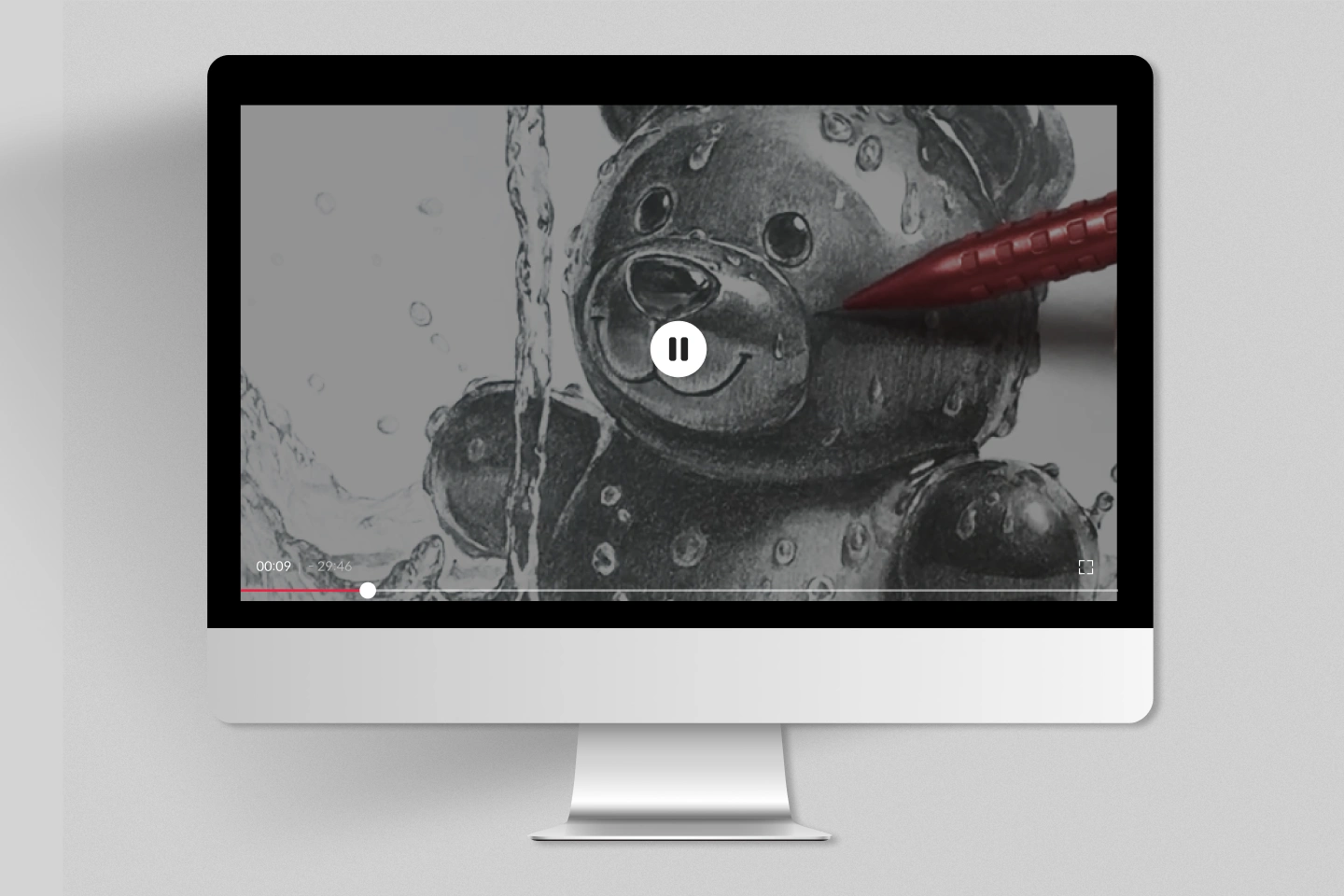
8-Session Drawing Correction Practice VOD
with feedback-driven lessons based on real cases
Package Details
-
Dimensionality-Focused Revision Workbook- Identifying the causes of failed drawings and learning relevant theory
- Correcting weak points
- Practical problem-solving for line, light and shadow, tone, and structure
- Advanced formulas for rendering complex textures -
Practice VOD- Live demonstrations correcting real student drawings
- Feedback across 8 common drawing issue types
- Identifying weaknesses and restore your drawings through correction
Class Details
This package includes the following content.
-
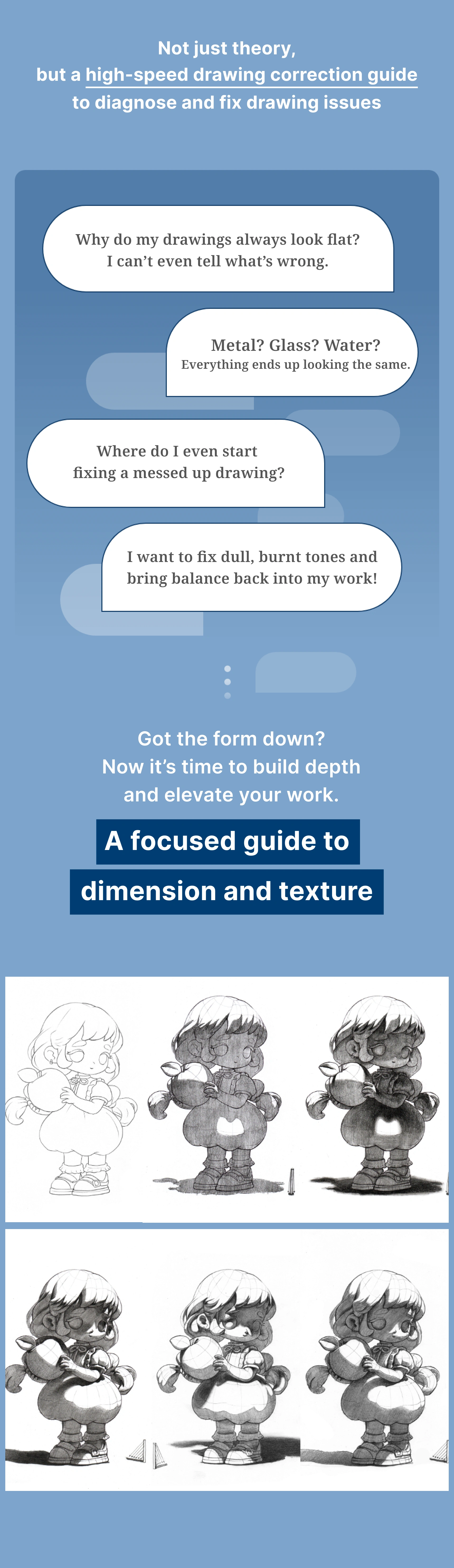
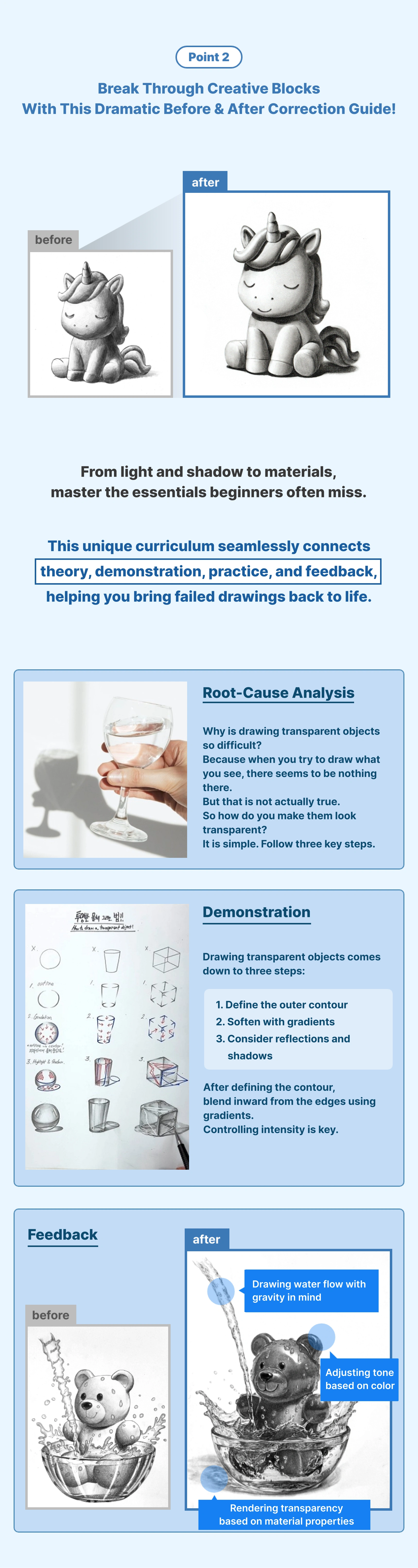
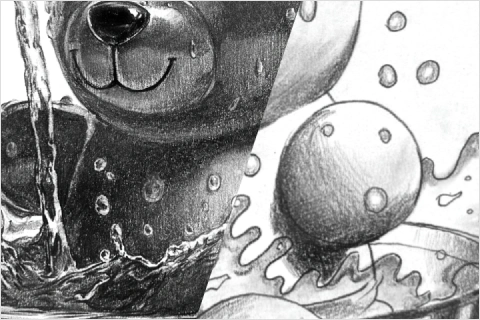 Unveiling a Powerful Revision Training Method to Revive Even Failed Drawings!Don’t miss this complete collection of type-based revision strategies to bring failed drawings back to life! Identify the causes behind collapsed form, lack of lighting, and burnt tones, and hone your skills with a correction routine that restores your work immediately. Go beyond simply fixing drawings and develop the ability to understand why a drawing fails and how to correct it.
 -
A Guide to Building a Strong Sense of Light and Shadow for Drawings That Lack DepthTrain your eye to identify what your work is missing. Move beyond simply applying light and dark, and develop a structured understanding of light and shadow step by step. Establish the hierarchy of highlights and shadows, realistically express volume and form, and enhance the sense of depth in your drawings.
-
How to Achieve Strong Tone Balance in Muddy DrawingsBreak away from dull, hazy results with practical methods that quickly identify problem areas. Learn how to use local values to keep light objects light and dark objects dark. Apply essential theory directly to your work through structured practice and strengthen your overall drawing skills.
-
Master Challenging Textures from Metal to Glass and WaterLearn structured methods for rendering textures and quickly recreate even unfamiliar materials. Understand how to use reflection, refraction, and contrast to handle reflective and transparent surfaces. From sharp metallic highlights to clear glass, build the skills to render complex materials with clarity and control.
-
A Workbook-Based Self-Diagnosis System Built on Problem SolvingA complete system where working through the workbook becomes your feedback. Learn how to identify and correct your weaknesses on your own. Follow the workbook step by step to fill in the gaps and build the ability to analyze and refine your own drawings.
-
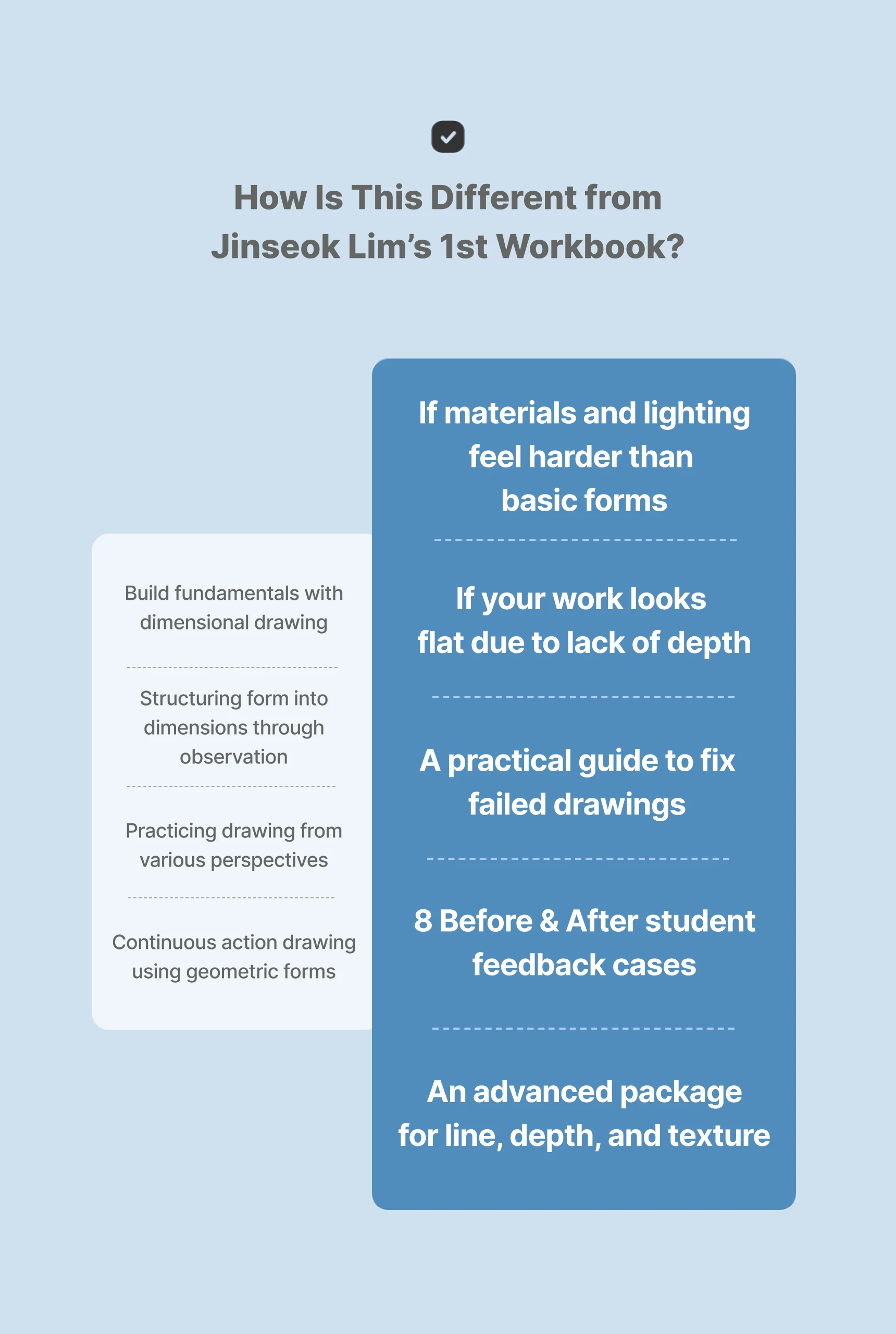
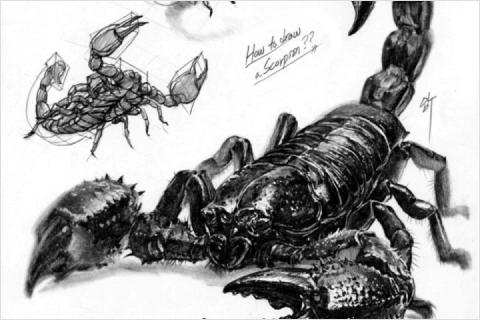 The Next Step to Overcome Slumps and Rebuild Your Growth CurveA foundational drawing course that continues from Miracle Drawing. Break through plateaus and regain steady progress in your skills. From core fundamentals to depth and texture, this course provides a structured roadmap for taking your sketching to the next level.

Illustrator Jinseok Lim
Current: Head Director, Hongdae Dagachi Art Academy (oversees college entrance training in basic form studies and drawing)
Projects & Awards
[Background]
2018: Founded Dagachi Art Academy, specializing in design entrance exams
2015-2017: Founded art toy brand “Handsome Studio”
2006-2009: Founded game concept art studio
[Projects]
2017: Exhibition at “Seoul Character & Licensing Fair”
2016: Exhibition at “Seoul Illustration Fair”
2016: Exhibition at “DDP Art Toy Culture”
2015: Exhibition at “COEX Art Toy Culture”
2008: Character illustration for “Dungeon & Fighter”
2007: Card illustration for “KBS Tai Chi Chasers”
[Awards]
2015: 2nd Prize, “Art Toy × Character Contest”
Table of Contents
E-Book Preview
01. 8 Drawing Skills to Transform Beginner-Like Lines Into Professional Ones
1-1. Preparing tools
1-2. Texture practice using drawing skills
1-3. Practice exercises
02. The Starting Point of Dimensionality: Cross-Contour Drawing
2-1. Cross-contour drawing
2-2. Practice exercises: Cross-contour drawing
2-3. Understanding ellipse form changes based on perspective
2-4. Reference materials: Geometric 3D wireframes
03. The Logic of Light and Shadow for Building Volume
3-1. Understanding the concept of local value
3-2. Designing tonal ranges based on material and inherent color brightness
3-3. Rendering bright objects brighter and dark objects darker
3-4. Practice exercises: Light and shadow
04. Why Do Drawings Look Burnt? Developing the Eye to Read Color as Value
4-1. Case studies: Failed drawings
4-2. Designing value structure with both light and color in mind
4-4. Practice exercises: Applying value with color in mind
4-5. Reference materials: Understanding local values by color
05. Completing Drawings with Light: Sculpting with Light
5-1. Understanding the basic principles of reflection
5-2. Understanding light from multiple angles
5-3. Practice exercises: Understanding light and shadow
06. Texture Rendering 1: How to Draw Diffuse Surfaces
6-1. Understanding diffuse surfaces
6-2. Practice exercises (partial): Diffuse surfaces
6-3. Practice exercises (full): Diffuse surfaces
07. Texture Rendering 2: How to Draw Reflective Surfaces
7-1. Case studies: Reflective surfaces from failed drawings
7-2. Tips for drawing reflective surfaces
7-3. Practice exercises: Reflective surfaces
7-4. Reference materials: Reflective surfaces
08. Texture Rendering 3: Rendering Transparent Materials
8-1. Case studies: Analyzing causes of failed drawings
8-2. The process for rendering transparent materials
8-3. Practice exercises: Transparent materials
8-4. Reference materials: Rendering water
8-5. Reference materials: Basic methods for rendering transparency
09. Texture Rendering 4: Special Textures
9-1. Understanding special textures
9-2. Process analysis for rendering special textures
9-3. Practice exercises: Special textures
10. Comprehensive: Revision Cases for Failed Drawings
10-1. Revision case 1: Analyzing the cause of failure and correcting it
10-2. Revision case 2: Analyzing the cause of failure and correcting it
Curriculum
In-Depth Look
1. Revision for Failed Drawings: How to Use Lines Like a Pro
- - Class overview: How to use the workbook
- Using lines that look professional
- Creating clean gradations by controlling pen pressure, spacing, speed, and overlapping
- Improving quality with non-clumping lines and even tones
2. Revision for Failed Drawings: Line Usage That Looks Professional
- - Practicing three-dimensional expression using only lines
- How to create perspective and depth through line spacing variations
- How to provide a sense of space and focus using line weight
- How to express 3D mass through hatching
3. Revision for Failed Drawings: How to Master Volume
- - Step-by-step learning of highlights, halftones, core shadows, reflected light, and cast shadows
- Training the eye to intuit Lambert's Cosine Law
- Separating light and dark by redesigning the tonal range
- Practice on reviving dull drawings into vivid ones
4. Revision for Failed Drawings: Restoring "Burnt" Drawings
- - Understanding the concept of local value
- Designing tonal ranges based on the original brightness of materials and colors
- How to keep light objects light and dark objects dark
- Establishing order in the composition through overall tonal balance
5. Revision for Failed Drawings: Depiction to Enhance Texture
- - How to prevent the form from collapsing while adding details
- Routines for stable rendering while bringing out textures
- Integrated rendering practice to improve the level of completion
6. Revision for Failed Drawings: Matte Surface Treatment
- - How to observe objects through structure and shading prioritized over texture
- Understanding shading and accurately expressing gradations unique to diffuse reflectors
- Acquiring smooth blending techniques by adjusting the pressure of drawing tools
7. Revision for Failed Drawings: How to Render Metallic Luster
- - Understanding the basic principles of reflection
- Understanding the sharp value transitions unique to metal
- Training in sharp highlight expression
- Analyzing reflectors like metal and chrome as simple patterns
- Completing convincing reflective rendering with high contrast
8. Revision for Failed Drawings: Depicting Transparent Objects 1
- - Understanding the basic principles of transparent expression
- Training in the trio of surface reflection, internal refraction, and sense of thickness
9. Revision for Failed Drawings: Depicting Transparent Objects 2
- - Techniques for leaving highlights as the white of the paper
- How to transform a "gray mass" into "true transparency"
10. Revision for Failed Drawings: Drawing Gemstone Textures
- - Understanding gemstone textures
- How to simultaneously process reflection, diffuse reflection, refraction, and distortion
- Tips for accurately expressing various types of sparkles
Explore More Courses
File Information and Notes
